Nickel Strip Thickness Guide: How to Choose the Right Gauge
.png?token=eyJraWQiOiJzdG9yYWdlLXVybC1zaWduaW5nLWtleV84ODdiMWJmNC1hOWFhLTQ2N2QtYTAwYy0zYTRkZTVjOTFlNWIiLCJhbGciOiJIUzI1NiJ9.eyJ1cmwiOiJJbWFnZXMvSC1UeXBlIEJ1c2JhciAoNCkucG5nIiwic2NvcGUiOiJkb3dubG9hZCIsImlhdCI6MTc4MzY3ODEwMywiZXhwIjozMDQ1MTE4MTAzfQ.hdRx6u-jl-7cvGHz4geN2VTlRqN1o2YHMaW-GMvu_Zc) Choosing the correct gauge is one of the most consequential decisions in battery pack design. Too thin, and a Pure Nickel Strip interconnect overheats under load or fails during spot welding; too thick, and you waste material, add unnecessary pack weight, and make welding harder to control. This guide walks through how to select the right nickel strip thickness for 18650, 21700, and 32650 cells, EV packs, and general battery assembly.
Choosing the correct gauge is one of the most consequential decisions in battery pack design. Too thin, and a Pure Nickel Strip interconnect overheats under load or fails during spot welding; too thick, and you waste material, add unnecessary pack weight, and make welding harder to control. This guide walks through how to select the right nickel strip thickness for 18650, 21700, and 32650 cells, EV packs, and general battery assembly.
Why Nickel Strip Thickness Matters
Thickness directly governs three things in a battery interconnect: current-carrying capacity, resistive heating, and weldability. A strip that is too thin for the discharge current will develop hot spots, accelerate insulation degradation, and reduce pack life. A strip that is too thick resists the heat concentration spot welders rely on to form a strong nugget, leading to weak or inconsistent welds. The right thickness balances electrical performance against manufacturability for your specific cell configuration.
Standard Nickel Strip Thickness Range
Most battery-grade nickel strip is supplied between 0.10mm and 0.50mm, with a few common bands covering the majority of applications:
- 0.10mm – 0.15mm: Compact consumer electronics packs, single-cell tabs, and low-current 18650 configurations where space and weight are constrained.
- 0.15mm – 0.20mm: The most common range for H Type Nickel Strip used across 18650 and 21700 multi-cell (2P/3P/4P) configurations — balances weldability with meaningful current capacity.
- 0.20mm – 0.30mm: Higher-current 21700 and 32650 packs, power tool batteries, and configurations with wider strip widths to compensate for higher discharge rates.
- 0.30mm – 0.50mm: Busbar-grade applications, EV module interconnects, and Nickel Busbar assemblies carrying substantial pack-level current where strip width alone cannot meet the load.
Thickness by Battery Cell Type
Cell format and pack configuration are the starting point for thickness selection:
- 18650 cells: Nickel Strip for 18650 Battery packs typically runs 0.15mm for standard H-type and fuse-type configurations, moving up to 0.20mm for higher-drain applications.
- 21700 cells: Larger cell diameter and higher typical discharge currents generally call for 0.20mm as a baseline, especially in 2P and 4P H-type layouts.
- 32650 / 32700 cells: Used in higher-capacity energy storage applications; 0.15mm–0.20mm H-type strip is common, with width increased rather than thickness where extra current margin is needed.
- EV and ESS packs: Module-level interconnects and Nickel Busbar links often exceed strip-gauge thinking entirely, moving to thicker busbar stock sized by pack current and thermal design.
Thickness vs Current-Carrying Capacity
As a general engineering guideline, current capacity scales with cross-sectional area (thickness × width), not thickness alone — a thinner, wider strip can carry comparable current to a thicker, narrower one, with different welding and flex characteristics. Because acceptable temperature rise depends on your enclosure, ventilation, and duty cycle, treat published thickness ranges as a starting point and validate current capacity against your own thermal testing rather than a single fixed number.
Pure Nickel vs Nickel-Plated Steel: Thickness Considerations
Material choice interacts with thickness selection. Pure Nickel Strip offers lower resistivity than nickel-plated steel, so a given thickness of pure nickel typically carries more current at a lower temperature rise than the same thickness of plated steel. This means projects using nickel-plated steel for cost reasons often need to move up one thickness band to match the electrical performance of a thinner pure nickel equivalent — a tradeoff worth modelling before committing to a bill of materials.
Thickness Tolerance and Manufacturing Precision
Consistent thickness across a coil matters as much as the nominal value. Variation within a batch changes weld energy requirements from strip to strip, causing inconsistent nugget formation on automated welding lines. Ramani Steel House manufactures to tight thickness tolerances with batch-wise conductivity and dimensional testing, so H Type Nickel Strip and custom gauges behave predictably across an entire production run.
How to Choose the Right Thickness
Work through these questions before finalizing a specification:
- What is the continuous and peak discharge current per cell and per parallel group?
- What welding method will be used — spot welding, laser welding, or ultrasonic bonding — and what thickness range does that process handle reliably?
- Is the strip pure nickel or nickel-plated steel, and how does that change the required gauge for equivalent performance?
- What are the pack's thermal limits, enclosure ventilation, and expected duty cycle?
- Does the application call for a standard H-type/fuse-type strip, or a custom width-and-thickness combination?
Ordering Custom Nickel Strip Thickness
As a Nickel Strip Manufacturer India, Ramani Steel House stocks standard thicknesses from 0.10mm to 0.50mm and manufactures custom gauges, widths, and H-type/fuse-type/zig-zag patterns to drawing specification. Whether you need Pure Nickel Strip for a compact 18650 pack or Nickel Busbar stock for an EV module, our engineering team can help confirm the right thickness for your current, welding, and thermal requirements.
Request a thickness recommendation and quote from our engineering team.
Frequently Asked Questions
What is the standard nickel strip thickness for 18650 batteries?
Most Nickel Strip for 18650 Battery packs uses 0.15mm for standard H-type and fuse-type configurations, moving up to 0.20mm for higher-drain applications.
How does nickel strip thickness affect current capacity?
Current capacity scales with cross-sectional area (thickness x width), not thickness alone. A thinner, wider strip can carry comparable current to a thicker, narrower one, but the two behave differently under welding and flexing.
What thickness tolerance can Ramani Steel House manufacture?
We manufacture to tight thickness tolerances with batch-wise conductivity and dimensional testing, ensuring consistent weld energy requirements across an entire coil or production run.
Should I use thicker nickel strip for EV battery packs?
EV and ESS module interconnects often move beyond strip-gauge thinking entirely to thicker Nickel Busbar stock, sized by pack current and thermal design rather than a standard strip thickness band.
Can nickel strip thickness be customized for H-type or fuse-type strips?
Yes. Ramani Steel House manufactures custom gauges, widths, and H-type, fuse-type, and zig-zag patterns to drawing specification in addition to our standard 0.10mm to 0.50mm stock range.
Products covered in this article
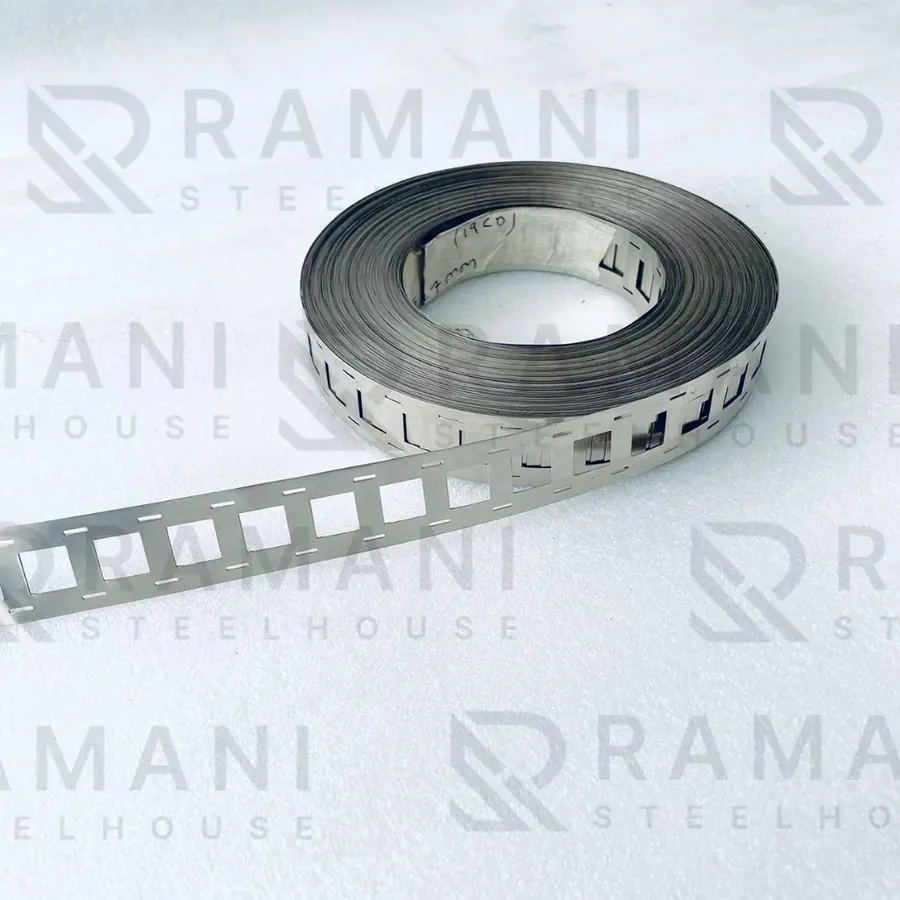 21700 2P H-type — Thickness: 0.20mm
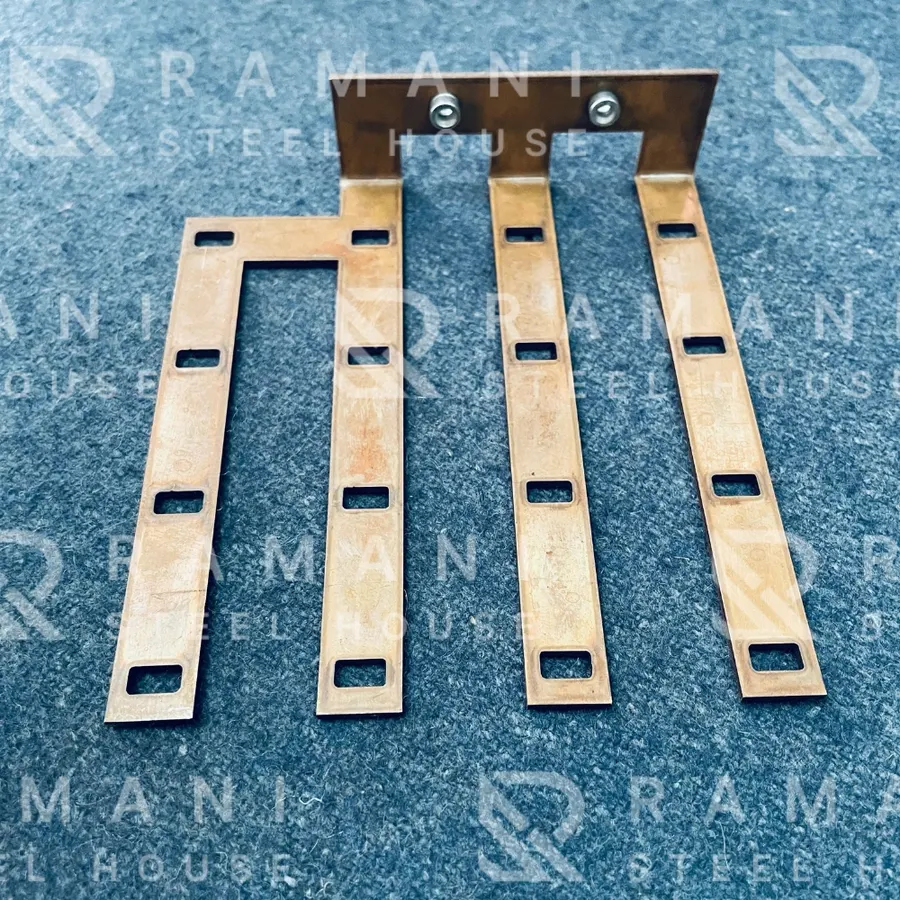 Copper Busbar
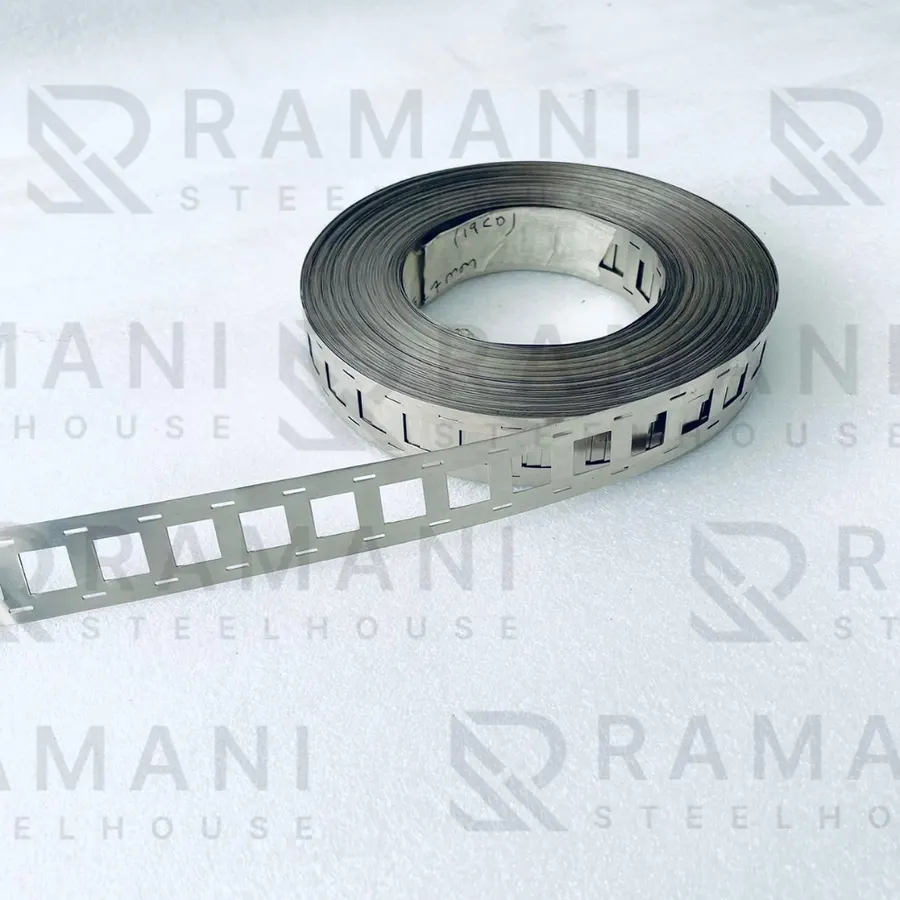 Ni 18650 2P H-Type Fuse Nickel Strip — Thickness: 0.15mm
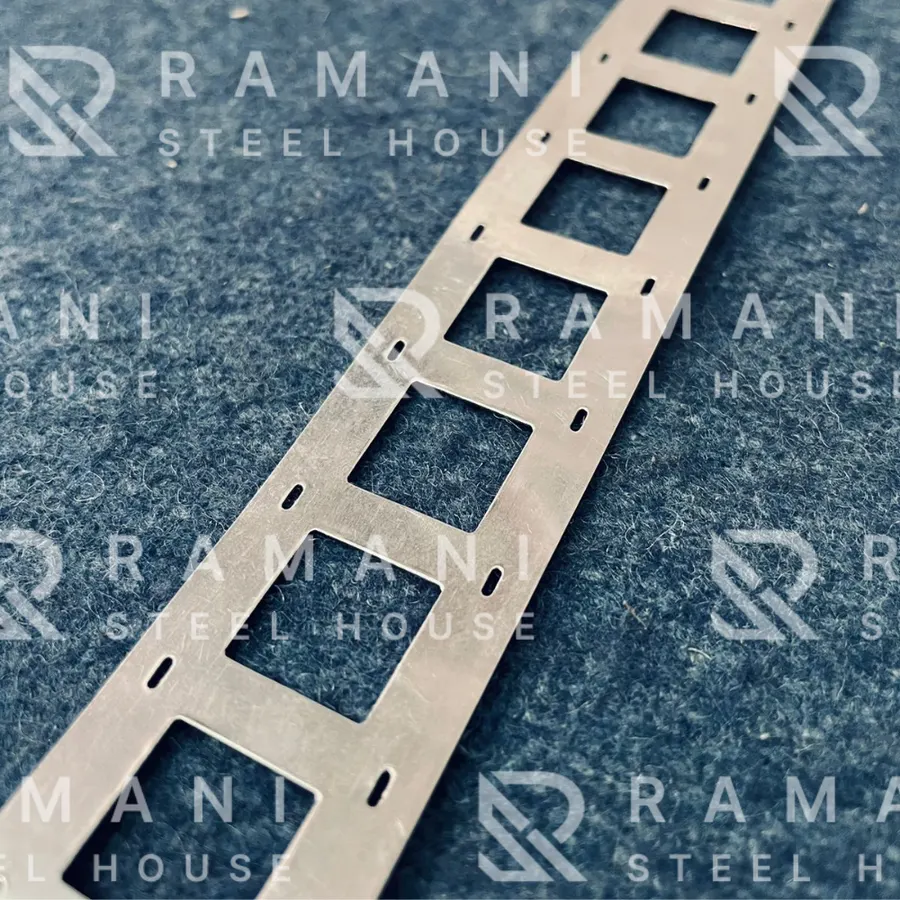 Ni 18650 2P H-Type Nickel Strip — Thickness: 0.15mm
Related guides
- Nickel Strip Surface Finish Guide: Bright, Matte, and Nickel-Plated Explained
- Nickel Strip vs Copper Busbar: How to Choose the Right Interconnect Material for Lithium-Ion Battery Packs
- Nickel Strip Storage and Handling Guide: Preventing Oxidation Before Welding
- Nickel Strip Pricing Guide: What Determines Cost for Bulk Battery Pack Orders
All nickel strip guides and technical articles · Nickel strip and busbar products