Nickel Strip vs Copper Busbar: How to Choose the Right Interconnect Material for Lithium-Ion Battery Packs

Every lithium-ion battery pack has two very different electrical connection jobs to do, and no single metal is optimal at both. At the cell level, you need a material that resistance-spot-welds cleanly to a nickel-plated steel or aluminum can without blowing through the foil-thin wall of an 18650, 21700, or 32650 cell. At the module and pack level, you need a material that can carry tens or hundreds of amps continuously without turning the joint into a heater. Pure nickel strip is built for the first job. Copper busbar is built for the second. Understanding why — not just which one to buy — is what lets an engineer or procurement team make the right call instead of defaulting to habit.
This guide compares Plain Nickel Strip (UNS N02200, supplied to ASTM B162) and Copper Busbar (supplied to ASTM B187) on the properties that actually matter for battery interconnect design: electrical resistivity, weldability, corrosion behaviour, weight, and where each one belongs in a real pack.
Electrical Resistivity: The Property That Drives Everything Else
Resistivity (ρ) is the single biggest reason nickel strip and copper busbar exist as separate product categories rather than one material doing both jobs. According to Special Metals' Nickel 200/201 technical bulletin, commercially pure Nickel 200 (UNS N02200, minimum 99.0% nickel plus cobalt) has an electrical resistivity of approximately 0.096 μΩ·m — about 9.6 μΩ·cm — at 20°C. Annealed copper, by contrast, is the material used to define the International Annealed Copper Standard (IACS): 100% IACS conductivity corresponds to a resistivity of 1.7241 μΩ·cm at 20°C, a figure corroborated by standard materials references such as Engineering Toolbox's resistivity tables.
Put simply, Nickel 200 is roughly five and a half times more resistive than annealed copper of the same cross-section. That single fact explains almost every other difference in this article: why nickel strip is easy to spot weld and copper is not, why copper busbar is the default choice for high-current bulk interconnects, and why you cannot substitute one for the other without re-sizing the cross-section.
Resistance itself follows the standard formula:
R = ρ × L / A

R = resistance (ohms)
ρ = resistivity (ohm-metre)
L = current path length (metre)
A = cross-sectional area (square metre)
Because copper's ρ is about one-fifth to one-sixth of nickel's, a copper busbar can theoretically carry the same current as a nickel strip with a much smaller cross-section for the same resistive voltage drop and I²R heating — or carry far more current at the same cross-section. This is the core engineering reason busbars for EV modules and ESS racks are copper (see the applications listed for Copper Busbar: high-current battery pack busbars, EV battery module interconnection, and energy storage system wiring) while cell-to-cell tab connections use nickel strip instead.
Why Nickel Strip Welds Cleanly and Copper Does Not
Resistance spot welding works by passing a high current through two overlapping sheets clamped between electrodes for a short pulse, and relying on localized Joule heating (Q = I²Rt) at the interface to form a fused nugget. Two material properties decide whether that heat stays put long enough to form a weld: electrical resistivity (higher means more heat generated at a given current) and thermal conductivity (lower means the heat stays local instead of draining into the surrounding metal and the copper electrodes).
Nickel scores well on both counts for resistance welding. The same Special Metals bulletin lists Nickel 200's thermal conductivity at roughly 70.3 W/m·K at 20°C. Copper's thermal conductivity is around 390–401 W/m·K at similar temperatures per Engineering Toolbox's thermal conductivity tables — five to six times higher. Combine copper's very low resistivity with its very high thermal conductivity and you get a material that resists forming a weld nugget: the heat generated is small to begin with, and what little is generated is conducted away almost as fast as it forms, straight into the electrodes. This is precisely why copper busbars are joined mechanically (bolted or crimped), by soldering or brazing, or by ultrasonic and laser welding in production environments — not by conventional resistance spot welding, which remains the standard, well-understood joining method for nickel strip to cell tabs. For weld parameter guidance on nickel strip specifically (electrode force, pulse energy, surface preparation), see our separate guide on battery spot welding tips for nickel strip.
This distinction also explains why fuse-protected honeycomb nickel strip designs work: the same resistivity that makes nickel weldable also lets a deliberately narrowed neck in the strip act as a predictable fusible link under overcurrent. See fuse-type vs plain nickel strip for how that trade-off is engineered. Copper's low resistivity makes it a poor material for a fuse element for the same reason it's a poor material for a resistance-welded joint — you would need an impractically thin, long neck to generate meaningful I²R heating at rated current.
Corrosion Behaviour and Why It Matters in a Sealed Pack
Nickel's other headline property is corrosion resistance. The Special Metals bulletin describes Nickel 200 as having excellent resistance to many corrosive environments, a property that comes from the thin, stable, self-healing oxide film that forms on the surface. That matters inside a battery pack because tab and interconnect surfaces are exposed to trace electrolyte vapour, humidity ingress, and — in outdoor ESS or EV applications — condensation cycles over a multi-year service life. A nickel strip surface generally does not need additional plating to survive that environment.
Bare copper, by contrast, oxidizes and tarnishes in ambient air, and that oxide layer is both electrically resistive and cosmetically unstable — not a combination you want at a high-current busbar joint. This is why copper busbars intended for long-term outdoor or humid-environment service are routinely tin-plated or nickel-plated at the contact surfaces across the wider busbar industry, even though the bulk conductor remains copper for its conductivity advantage. If your application involves outdoor ESS enclosures, marine environments, or high-humidity manufacturing regions, ask your supplier specifically about surface finish and plating on any copper busbar, and confirm expected service life under your actual environmental exposure rather than assuming bare copper will perform like bare nickel.
Bare Copper vs Nickel Plated Copper Busbar
Because bare copper tarnishes, a nickel plated copper busbar is a common compromise in battery packs: the copper core keeps its conductivity advantage for bulk current, while a thin nickel layer at the surface resists oxidation and keeps contact resistance more stable over the service life. Tin plating does a similar job at lower cost; nickel plating is typically chosen where the busbar runs hotter or sits in a harsher environment.
Three points are worth checking before you specify a nickel plated busbar:
- The plating is a surface finish, not the conductor. Current is still carried by the copper, so size a nickel plated copper busbar from copper's resistivity, not nickel's.
- Plating thickness and coverage. Ask for the specified plating thickness and whether cut edges and punched holes are covered, because exposed copper at an edge is where corrosion starts.
- Joining method. Plating does not change copper's bulk conductivity, so it does not make a copper busbar resistance-spot-weldable to cell cans the way nickel strip is. Joints are still typically bolted, laser welded or ultrasonically welded.
A nickel plated copper busbar is also a different product from nickel plated steel strip, which puts the nickel layer over a higher-resistance steel core rather than copper.
Weight and Density: A Smaller Difference Than Most Engineers Expect
It's a common assumption that switching from nickel to copper trades conductivity for weight. In practice, the density difference between the two metals is much smaller than the resistivity difference. Nickel 200 has a density of 8.89 g/cm³ per the Special Metals bulletin; copper's density is about 8.94 g/cm³ (8,940 kg/m³) per Engineering Toolbox's metal density tables. That is less than a 1% difference — nickel and copper are, gram for gram, almost interchangeable in density.
What this means practically: any weight saving you get from choosing copper over nickel (or vice versa) for a given current-carrying job comes almost entirely from the cross-sectional area you are able to use — because copper can be sized smaller for the same resistive loss — not from the density of the metal itself. Do not budget pack weight assuming "copper is heavier" or "nickel is lighter"; budget it from the actual cross-section each material needs to meet your resistance and temperature-rise target.
Where Each Material Actually Belongs in a Pack
Looking at the applications behind each product line makes the division of labour clear:
- Plain Nickel Strip (UNS N02200, ASTM B162, available from 0.1 mm to 1.0 mm thickness) is specified for 18650, 21700, and 32650 battery pack assembly, battery tab spot welding, and general-purpose battery interconnects — i.e. anywhere you are joining directly to a cell can or tab. This includes H-type interconnect strips used for 2P/3P/4P multi-cell configurations, such as Ni 18650 2P H-Type Nickel Strip, Ni 21700 2P H-Type Nickel Strip, and Ni 32650 2P H-type, plus fuse-protected honeycomb variants such as Ni Fuse-Type 18650 — H-Type Honeycomb where a controlled weak point is engineered into the strip.
- Copper Busbar (ASTM B187) is specified for high-current battery pack busbars, EV battery module interconnection, and energy storage system (ESS) wiring — i.e. anywhere current is aggregated across many cells or modules and needs to move with minimal resistive loss over a longer run.
Most real packs use both: nickel strip at the cell-tab level, where weldability and fine control of resistance (including deliberate fusing) matter most, and copper busbar at the module or pack level, where bulk current transfer efficiency matters most. If your design needs a cross-section, temper, or configuration outside a standard catalogue item — for either material — a custom nickel strip line such as Ni Custom can typically be engineered to a drawing; start that conversation through the enquiry form or the contact page.
Sizing a Cross-Section: Method, Not a Fixed Number
It would be convenient to publish a single "amps per square millimetre" figure for nickel strip and another for copper busbar. It would also be irresponsible, because safe current-carrying capacity is not a fixed property of the metal alone — it depends on the whole assembly. The variables that actually decide it include: ambient temperature inside the enclosure; whether the load is continuous or a pulsed/duty-cycle profile; the number of strips or busbar layers used in parallel; the resistance of the weld or joint itself (which is very often the dominant heat source, not the bulk conductor); airflow or liquid cooling around the interconnect; the temperature rating of nearby insulation, separators, and the cell itself; and the safety margin your product safety case requires.
The correct process is to start from the resistivity and geometry using R = ρ×L/A and P = I²R to estimate resistive heating, then validate the result with real thermal measurement on a representative sample of your actual assembly — not a datasheet number applied blindly. Our dedicated guide, Nickel Strip Current Carrying Capacity: An Engineer's Guide to Safe Battery Pack Design, walks through this method in detail for nickel strip; the same underlying approach applies to copper busbar with copper's resistivity substituted in. You can model candidate cross-sections for your own current and length requirements using our calculator, but always confirm the final design against a thermal test under your worst-case ambient and duty cycle before locking a production spec.
Quick Reference
Property                 Plain Nickel Strip          Copper Busbar
------------------------ ---------------------------- ----------------------------
Base standard            ASTM B162                    ASTM B187
Grade / UNS              Nickel 200, UNS N02200        Not specified in catalogue*
Electrical resistivity   ~9.6 uOhm-cm @ 20C            1.7241 uOhm-cm @ 20C (IACS)
                          (Special Metals bulletin)     (International standard)
Thermal conductivity     ~70.3 W/m-K @ 20C              ~390-401 W/m-K
                          (Special Metals bulletin)     (Engineering Toolbox)
Density                  8.89 g/cm3                     ~8.94 g/cm3 (8,940 kg/m3)
Typical joining method   Resistance spot welding        Bolting, crimping, brazing,
                                                          ultrasonic/laser welding
Typical pack-level role  Cell tab / H-type interconnect  Module & pack-level busbar
Thickness range on file  0.10 mm - 1.00 mm               Confirm via enquiry*

* Ask for the current mill certificate / UNS designation and dimensional
  range for the specific Copper Busbar batch via the enquiry form -
  this article does not assume specs beyond what is confirmed at order time.
What to Specify When You Source Either Material
Whichever metal your design calls for, the sourcing conversation is smoother and the incoming inspection is cleaner if you specify these up front:
- Grade and UNS designation (e.g. Nickel 200 / UNS N02200) rather than just "nickel strip" or "copper busbar," since purity and alloying limits affect both resistivity and weldability.
- The governing ASTM specification number (ASTM B162 for nickel strip, ASTM B187 for copper bus bar) so the supplier tests and certifies against the same standard you're designing to.
- Thickness and width, with tolerance — not just a nominal dimension, since resistance and weld heat input are sensitive to cross-sectional area.
- Temper or hardness (soft-annealed versus cold-rolled/half-hard), which affects both formability during stamping and long-term fatigue resistance at flex points.
- Surface finish and any plating requirement, particularly for copper busbar in humid or outdoor-exposed applications.
- Mill certificates and batch traceability documentation, especially for automotive, medical device, or aviation-adjacent programs with formal supplier qualification requirements.
- A sample quantity for weld or joining trials before committing to a full production order — this is the cheapest insurance against a spec mismatch.
You can submit these requirements directly through the product enquiry form, browse current catalogue options on the products page, or reach the engineering team through contact for anything outside a standard listing.
The Bottom Line
Nickel strip and copper busbar are not competing options for the same job — they are complementary materials for two different jobs inside the same pack. Nickel's higher resistivity and lower thermal conductivity make it the practical, weldable choice at the cell tab, where a predictable, controllable joint matters more than minimizing resistance. Copper's much lower resistivity makes it the practical choice once you're moving bulk current between modules or out to the pack terminals, where minimizing I²R loss and heat generation over a longer run matters more than weldability. Specify the correct grade and standard for each — Nickel 200 / UNS N02200 to ASTM B162 for strip, ASTM B187 for bus bar — and size each one from first-principles resistance and heating calculations validated against real thermal data, not assumptions carried over from the other metal. Browse the current nickel strip and copper busbar range, model your interconnect on the calculator, or send your drawing through the enquiry form for a custom quote.
Frequently Asked Questions
Can nickel strip and copper busbar be used together in the same battery pack?
Yes, and in higher-current packs this is the common architecture: nickel strip handles the weldable cell-to-cell tab connections, and copper busbar carries the aggregated current between modules or out to the pack terminals, where bolted or crimped connections are practical instead of resistance spot welding.
Why can't I just resistance spot weld copper busbar directly onto a cell can?
Copper's low electrical resistivity (about 1.7241 microohm-cm versus roughly 9.6 microohm-cm for Nickel 200) generates far less localized Joule heat at the weld interface, and its high thermal conductivity, five to six times that of nickel, carries away what heat is generated before a nugget can form. That is why copper interconnects are typically bolted, crimped, brazed, soldered, or ultrasonically/laser welded instead.
How much lower is copper's electrical resistance compared with nickel strip of the same size?
Based on Nickel 200's resistivity of roughly 9.6 microohm-cm and copper's IACS reference resistivity of 1.7241 microohm-cm, copper is roughly five and a half times less resistive than Nickel 200 at the same cross-section. Actual figures shift with temper, purity, and temperature, so validate against your supplier's mill certificate for a given batch rather than treating this ratio as exact.
Does nickel strip need corrosion protection the way copper busbar sometimes does?
Generally no. Nickel forms a stable, self-healing passive oxide layer and is described in manufacturer literature as having excellent resistance to many corrosive environments, so bare nickel strip is normally left unplated. Bare copper oxidizes and tarnishes in air, so copper busbars intended for humid, outdoor, or long-service applications are commonly tin-plated or nickel-plated at the contact surfaces, confirm this with your supplier if your application is environmentally demanding.
What ASTM and UNS designations should I ask for when sourcing?
For nickel strip, ask for Nickel 200 (UNS N02200) supplied to ASTM B162. For copper bus bar, ask for material supplied to ASTM B187, and request the specific alloy/UNS designation and mill certificate for the batch, since this is confirmed at order time rather than fixed in the general catalogue listing.
How do I size a strip or busbar cross-section for my pack's current?
Start with R = resistivity x length / area to estimate resistance, then use P = I-squared x R to estimate resistive heating at your target current. Treat this as a starting estimate, model it with the calculator tool, and confirm the final cross-section with thermal testing on your actual assembly under worst-case ambient temperature and duty cycle.
What is a nickel plated copper busbar, and when is it used?
It is a copper busbar with a thin nickel layer on its surface. The copper carries the current, while the nickel resists oxidation and keeps contact resistance more stable. Nickel plated busbars are used in humid, outdoor or higher-temperature battery and ESS applications where bare copper would tarnish at the joints.
Products covered in this article
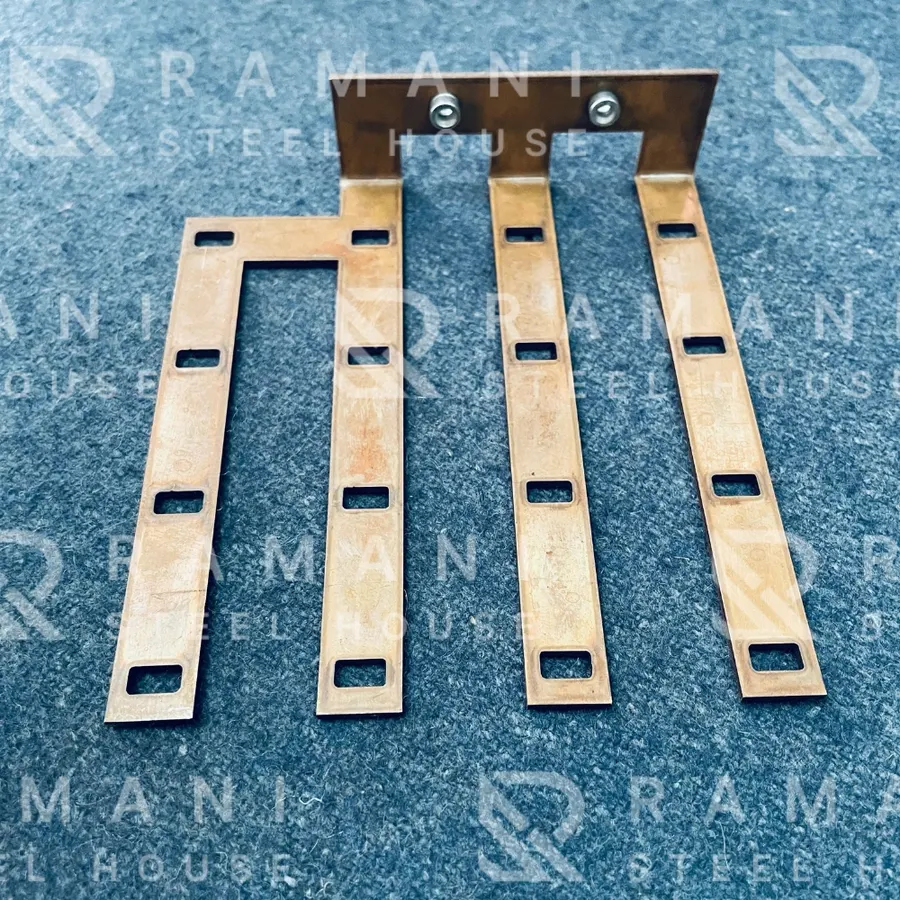 Copper Busbar
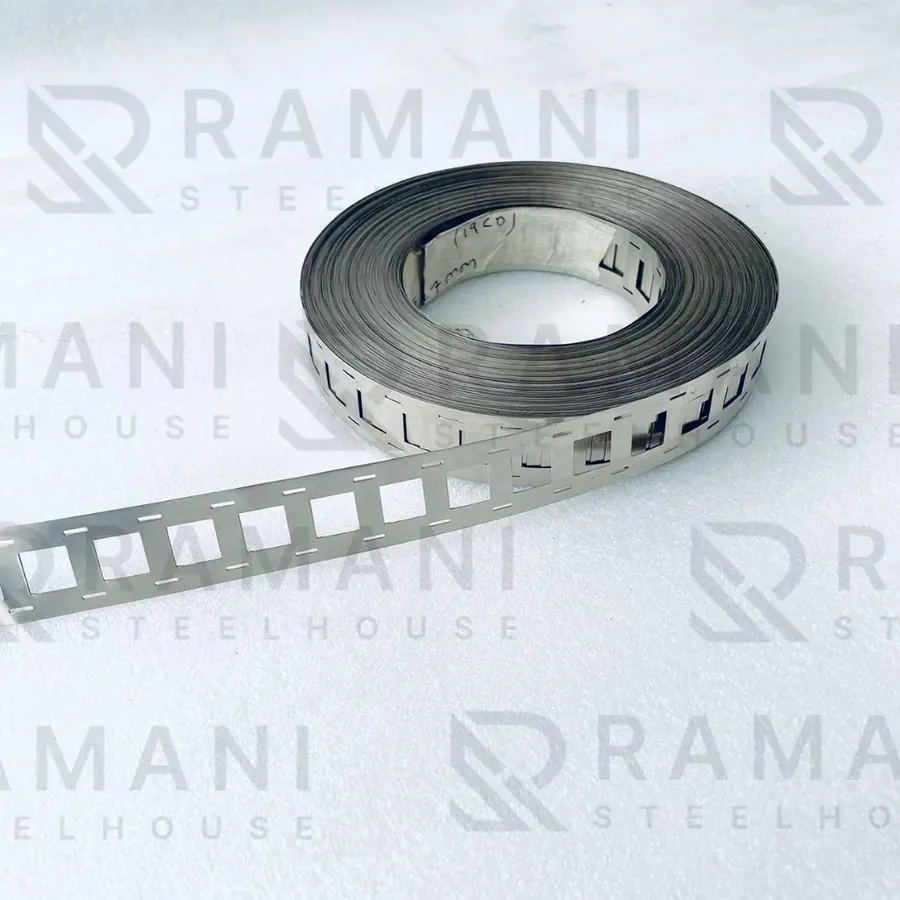 21700 2P H-type — Thickness: 0.20mm
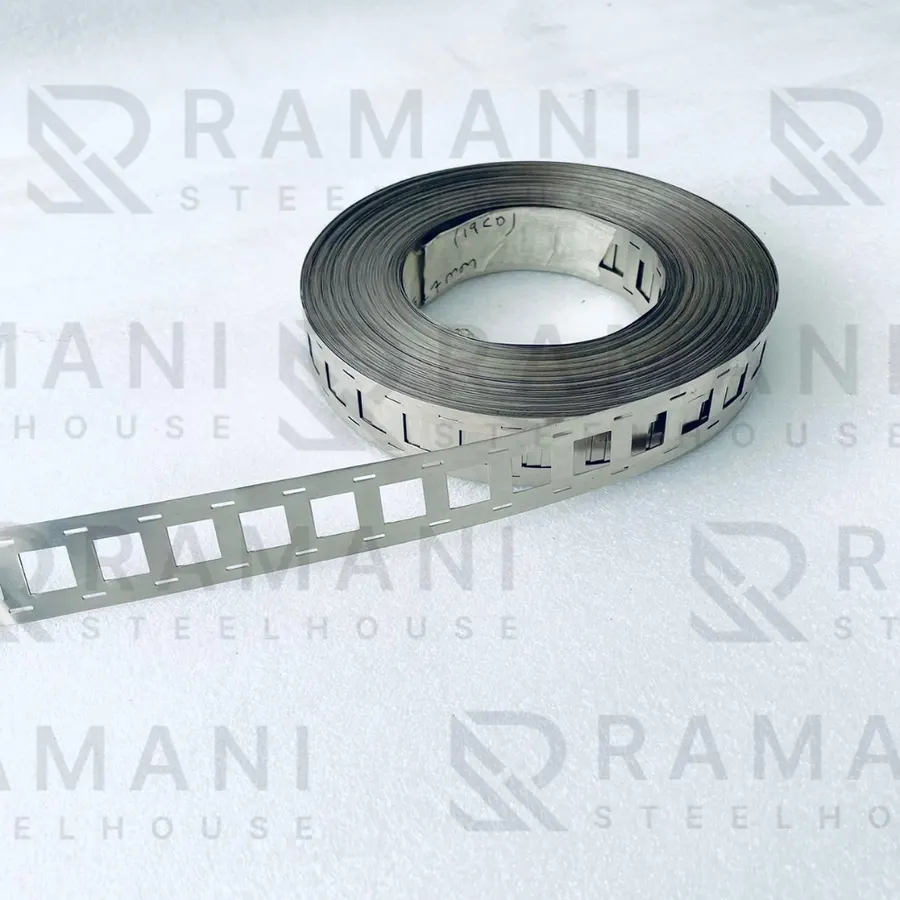 Ni 18650 2P H-Type Fuse Nickel Strip — Thickness: 0.15mm
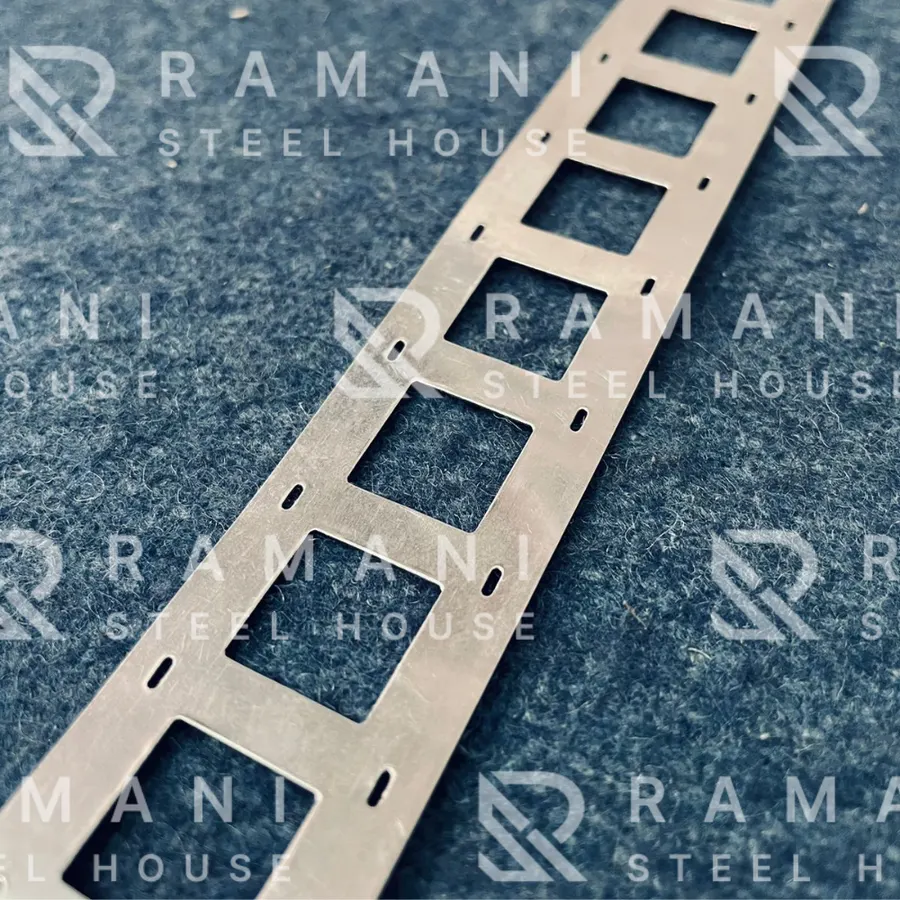 Ni 18650 2P H-Type Nickel Strip — Thickness: 0.15mm
Related guides
- Nickel Strips for Electric Vehicles (EVs): The Backbone of Reliable Lithium-Ion Battery Packs
- Zig-Zag vs H-Type Nickel Strip: Choosing the Right Interconnect Pattern for Your Battery Pack
- Nickel 200 vs Nickel 201: Which Alloy Is Right for Battery-Grade Nickel Strip?
- Nickel Strip Thickness Guide: How to Choose the Right Gauge
All nickel strip guides and technical articles · Nickel strip and busbar products