Fuse-Type vs Plain Nickel Strip: When Does a Battery Pack Actually Need a Built-In Fuse?

Look at a plain nickel strip and a fuse-type honeycomb strip side by side and the difference is obvious: one is a flat rectangle, the other has a pattern of cutouts stamped into it. What's less obvious is why a manufacturer would deliberately remove metal from a current-carrying part — and whether your pack actually needs that trade-off or is paying for a safety feature it doesn't need.
This guide covers how the fuse neck in a stamped strip actually works, what it costs you in normal operation, and how to decide between Plain Nickel Strip and a fuse-type interconnect for a specific pack design — instead of defaulting to one or the other out of habit.
In This Guide
- Fused nickel strip, nickel fuse strip or fuse-type: what the names mean
- How the fuse neck in a honeycomb or zig-zag strip actually works
- The always-on cost: resistance and heat in normal operation
- When a fuse-type strip earns its keep
- When plain strip is the better engineering choice
- Coordinating the fuse neck with your BMS, not against it
- A side-by-side comparison from our current catalog
- Sizing the fuse neck for your fault current
- Selection checklist
Fused Nickel Strip, Nickel Fuse Strip or Fuse-Type Strip?
The same part is sold under several names. Fused nickel strip, nickel fuse strip, nickel strip fuse and fuse-type nickel strip all describe pure nickel interconnect strip with a deliberately narrowed neck stamped into it, so that the strip itself acts as a fusible link between a cell and the rest of its parallel group. When you compare quotations, treat the names as interchangeable and compare what actually changes performance: thickness, fuse neck geometry, pattern and cell pitch.
The right pattern depends mostly on the cell format:
- Nickel fuse strip for 18650 cells: honeycomb H-type fused nickel strip, zig-zag honeycomb nickel fuse strip, or the 18650 2P H-type fuse strip, each in 0.15mm pure nickel.
- 21700 double fuse nickel strip: two fuse necks in series in 0.20mm pure nickel, for packs where redundancy in the fusing action is worth the extra resistance.
- Fuse nickel strip for 32700 LiFePO4 cells: a 2P zig-zag honeycomb pattern in 0.20mm pure nickel, sized for heavier continuous current.
Whichever name your drawing uses, the sections below cover what decides whether a fuse neck protects your pack or only adds resistance to it.
How the Fuse Neck Actually Works
The physics is the same conductor theory covered in our nickel strip current-carrying capacity guide: resistance is inversely proportional to cross-sectional area (R = rho x L / A), and power dissipated as heat scales with the square of current (P = I^2 x R). A honeycomb or zig-zag cutout removes metal from one section of the strip, narrowing it relative to the rest. That narrower section has less cross-sectional area, so it has higher resistance than the surrounding strip — and under the same current, it dissipates more heat.
In normal operation, that extra heat is small and manageable. But if a cell develops an internal short, the fault current through that interconnect rises sharply, and the I^2 term means the heat at the narrow neck rises far faster than everywhere else on the strip. The neck is designed to reach its melting point and open the circuit at that point, before the fault current can propagate to adjacent cells in the string. It is, functionally, a fuse stamped directly into the interconnect rather than a separate component.
The Always-On Cost: It's Not Free
This is the trade-off that's easy to overlook. A fuse neck is narrower all the time, not just during a fault. That means:
- Higher resistance at every tab, continuously. More voltage drop across the interconnect and more parasitic heat generated during normal charge and discharge — not just during a fault event.
- Lower ampacity headroom. The narrowed section, not the wide body of the strip, becomes the limiting factor for how much continuous current the interconnect can carry before it runs hot.
- A second thing to get right in production. The fuse neck's stamped geometry has to be consistent across a production run — an inconsistent cutout width means an inconsistent fault current threshold, which defeats the purpose of the feature.
None of this makes fuse-type strip a bad choice — it makes it a deliberate one. The question isn't "does fuse-type strip add safety," it's "does this specific pack's fault-tolerance requirement justify the continuous resistance and ampacity cost."
When a Fuse-Type Strip Earns Its Keep
Fuse-type strip is the right call when a single-cell internal short needs to be contained at the tab, close to the source of the fault, rather than relying entirely on upstream protection to react in time. This is typically the case for:
- High parallel-cell-count configurations (3P, 4P and above), where a single failed cell can be fed fault current by several healthy neighbors simultaneously, and containing that fault quickly matters more than in a 1P or 2P string.
- Packs without a fast-reacting cell-level protection circuit, where the interconnect itself is the first and fastest line of defense against a propagating fault.
- Applications where thermal runaway propagation is the dominant safety risk — consumer electronics, e-bike and power tool packs, and other dense assemblies where cell-to-cell spacing is tight and a contained single-cell failure is far preferable to a cascading one.
Our Ni Fuse type 21700 double-fuse strip is a good example of this logic taken further — two fuse necks in series on a single interconnect, aimed at configurations where redundancy in the fusing action itself is worth the additional resistance.
When Plain Strip Is the Better Choice
Plain strip is usually the right call when:
- The pack already has robust protection elsewhere — a fast BMS with per-cell or per-group current sensing, or cells with a strong internal safety design (CID, PTC) — and the interconnect's job is simply to conduct current efficiently, not to duplicate protection that already exists upstream.
- Ampacity and efficiency are the priority, such as high-C-rate discharge applications or energy-dense EV packs (see our EV battery pack guide) where every milliohm of resistance matters for range and heat management, and the continuous resistance penalty of a fuse neck is harder to justify.
- Cell configuration is low parallel count (1P or 2P), where a single cell's fault current contribution is smaller and easier for upstream protection to catch before propagation becomes a serious risk.
Our Plain Nickel Strip is supplied across a 0.1mm-1.0mm thickness range specifically so it can be tuned for conductivity and mechanical strength without the constraint of a fuse geometry — useful wherever the strip's only job is to carry current cleanly.
Coordinating the Fuse Neck with Your BMS
A fuse-type strip and a BMS are not competing solutions — they need to be coordinated, not stacked without thought. If the BMS's own overcurrent trip threshold is set lower than the current needed to open the fuse neck, the BMS will (correctly) disconnect the pack before the fuse neck ever gets hot enough to act, and you're paying the continuous resistance cost of a fuse feature that never actually triggers. If the fuse neck opens well before the BMS would have reacted, it's doing genuine protective work the BMS alone couldn't provide fast enough at the cell level.
Getting this right means knowing both numbers — your BMS's trip current and time constant, and the fuse neck's actual opening current for your geometry — and treating them as one coordinated protection scheme rather than two unrelated safety features bolted onto the same pack.
Fuse-Type vs Plain Strip: A Practical Comparison
Based on our current catalog specifications (ASTM/UNS designations as manufactured):
Product type              Thickness    Grade                    Continuous ampacity   Built-in fault protection
-------------------------  -----------  -----------------------  ---------------------  --------------------------
Plain Nickel Strip         0.1-1.0mm    ASTM B162 / UNS N02200   Highest (no narrowing)  None - relies on BMS/cell
Ni 18650 H-type            0.15-0.20mm  ASTM B162 / UNS N02201   High                    None - standard tab profile
Ni 18650 Zig-Zag           0.20mm       ASTM B162 / UNS N02201   Moderate-high           None - flexible cell spacing only
Ni Fuse-type Honeycomb     0.15-0.20mm  ASTM B162 / UNS N02201   Reduced at fuse neck    Single fuse neck per strip
Ni Fuse-type Double-Fuse   0.15-0.20mm  ASTM B162 / UNS N02201   Reduced at both necks   Two fuse necks in series
Note that fuse-type and standard H-type/zig-zag interconnects are all supplied to Nickel 201 (UNS N02201), the low-carbon grade preferred for repeated spot welding, while Plain Nickel Strip is supplied to Nickel 200 (UNS N02200) — the same grade distinction covered in our current-carrying capacity guide.
Sizing the Fuse Neck for Your Fault Current
A fuse neck is only useful if it opens at the right current — too wide and it never triggers during a genuine fault; too narrow and it opens during normal high-current operation, causing nuisance failures. Sizing it correctly requires:
- Your cell's internal short-circuit current characteristics (available from the cell manufacturer's datasheet or safety testing data)
- The pack's parallel cell count at that tab, since a fault is fed by every healthy parallel cell simultaneously, not just the current from a single cell
- Your BMS's trip threshold and reaction time, so the fuse neck and BMS are coordinated rather than working against each other
- Validation testing on the actual stamped geometry, not just a calculated estimate — real weld quality and material variation affect the actual opening current
This isn't something to reverse-engineer from a datasheet number. If you're sizing a fuse-type interconnect for a new pack, request a quote or contact our engineering team with your cell's short-circuit characteristics and parallel configuration, and we can propose a fuse neck geometry — standard or custom — to validate against your protection scheme.
Selection Checklist
- Identify what protection already exists upstream — BMS current sensing, cell-level CID/PTC — before assuming the interconnect needs to provide it too
- Check your parallel cell count at each tab; higher parallel counts raise the case for fuse-type protection
- Weigh the continuous resistance and ampacity cost of a fuse neck against your pack's efficiency and thermal budget
- Confirm the fuse neck's opening current is coordinated with your BMS's trip threshold, not competing with it
- Choose Nickel 201 (N02201) fuse-type or H-type strip for repeated spot welding; Nickel 200 (N02200) plain strip where raw conductivity matters more
- Validate fuse neck behavior with real testing before locking a production design
Conclusion
Fuse-type strip isn't a strictly "safer" upgrade over plain strip — it's a specific engineering trade-off that swaps some continuous ampacity and resistance for a built-in, self-fusing response to single-cell faults. Whether that trade-off is worth it depends on your parallel cell count, what protection already exists upstream in your BMS and cell design, and how tight your pack's efficiency and thermal budget really are. Get the coordination between the fuse neck and your BMS right, and you get a genuinely redundant layer of protection. Get it wrong, and you're either paying for a feature that never triggers or missing the protection you thought you had.
If you're deciding between plain and fuse-type strip for a new pack design, our engineering team can review your cell configuration and protection scheme directly — request a quote or contact us with your specification.
Frequently Asked Questions
What is fuse-type nickel strip, and how is it different from plain strip?
Fuse-type nickel strip has a deliberately narrowed section — usually cut in a honeycomb or zig-zag pattern — at one or more points along its length. That narrow neck has less cross-sectional area than the rest of the strip, so under a fault current it heats up and opens faster than the surrounding metal, breaking the circuit before the fault can propagate. Plain strip has no narrowed section: it is sized purely for conductivity and offers no built-in overcurrent protection of its own.
Does a fuse-type strip replace the need for a BMS or a separate fuse?
No. A fuse-type strip is a last-resort, physical failsafe at the cell-tab level, not a substitute for BMS-level current, voltage, and temperature monitoring or a pack-level fuse. It exists to contain a single-cell fault (an internal short) so it doesn't cascade through the rest of the string, but it doesn't replace the protection and disconnection logic a BMS provides at the pack level.
Why not use fuse-type strip on every battery pack, since it adds a safety margin?
Because the same narrowed cross-section that makes the fuse neck open under a fault also raises its resistance under normal operation, which means more heat and more voltage drop at every cell tab, all the time. For packs with tight capacity, efficiency, or thermal budgets — energy-dense EV packs, high-C-rate tools — that always-on penalty can outweigh the benefit if the pack already has robust cell-level and BMS-level protection elsewhere.
How do I know if my fault current will actually open the fuse neck?
You have to size the fuse neck geometry — width and length of the narrowed section — against your specific fault current scenario, not assume a standard cutout works for any pack. This requires knowing your cell's short-circuit current characteristics and validating fuse behavior with real testing, ideally in coordination with your BMS's own trip thresholds so the two don't work against each other.
Can I get a custom fuse neck width for my specific fault current requirement?
Yes. Our stamped strip tooling supports custom honeycomb and zig-zag geometries, including narrower or wider fuse necks than our catalog defaults, sized to your target fault current. Share your cell's short-circuit characteristics and pack configuration with our engineering team and we can propose a geometry to validate.
Is fused nickel strip the same as nickel fuse strip?
Yes. Fused nickel strip, nickel fuse strip, nickel strip fuse and fuse-type nickel strip are different names for the same part: pure nickel interconnect strip with a narrowed neck stamped into it, so the strip acts as a fusible link. Compare suppliers on thickness, fuse neck geometry, pattern and cell pitch rather than on the name used.
Which nickel fuse strip is used for 18650 cells?
For 18650 2P packs the usual options are honeycomb H-type and zig-zag honeycomb fuse patterns in 0.15mm pure nickel. The choice depends on your cell pitch, parallel count, and whether the strip needs to absorb cell-to-cell movement, which the zig-zag form does better than a straight H-type tab.
Products covered in this article
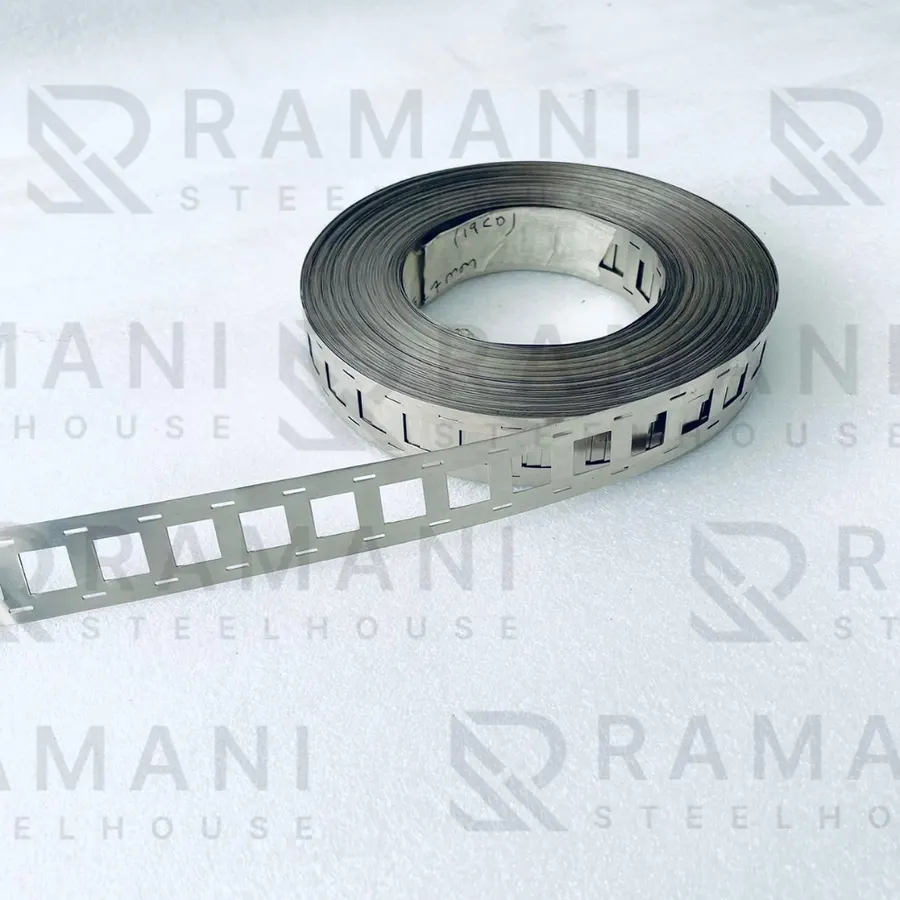 Ni 18650 2P H-Type Fuse Nickel Strip — Thickness: 0.15mm
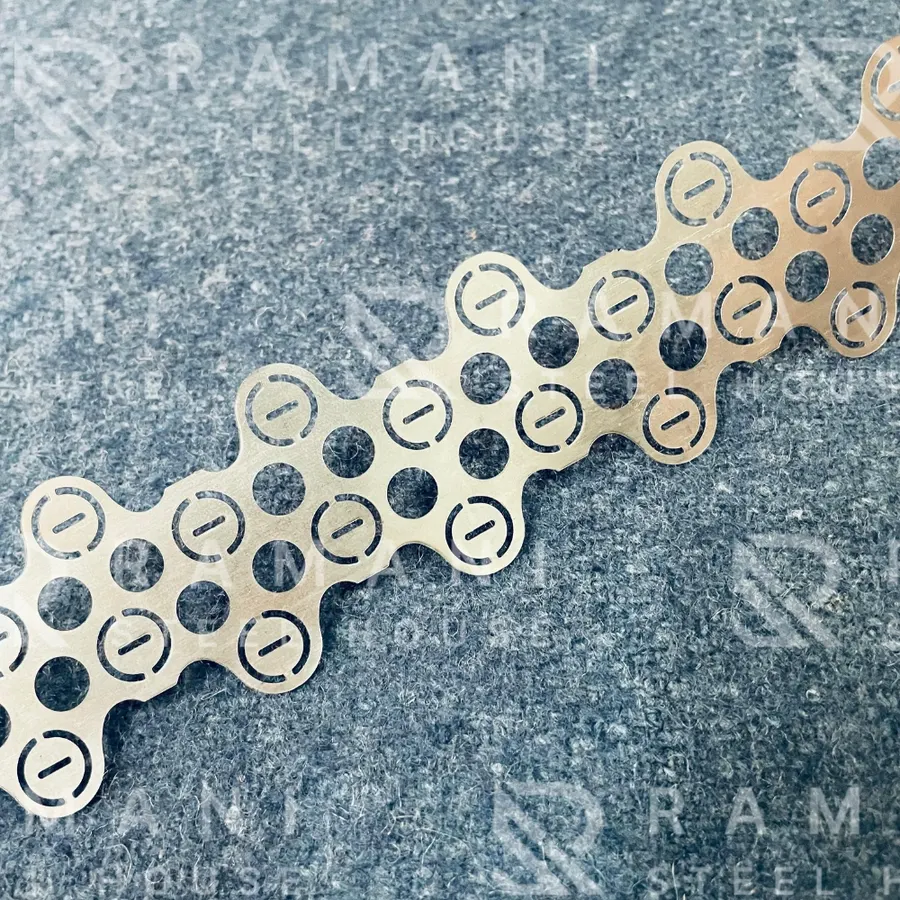 Ni Fuse type 21700 — Thickness: 0.20mm
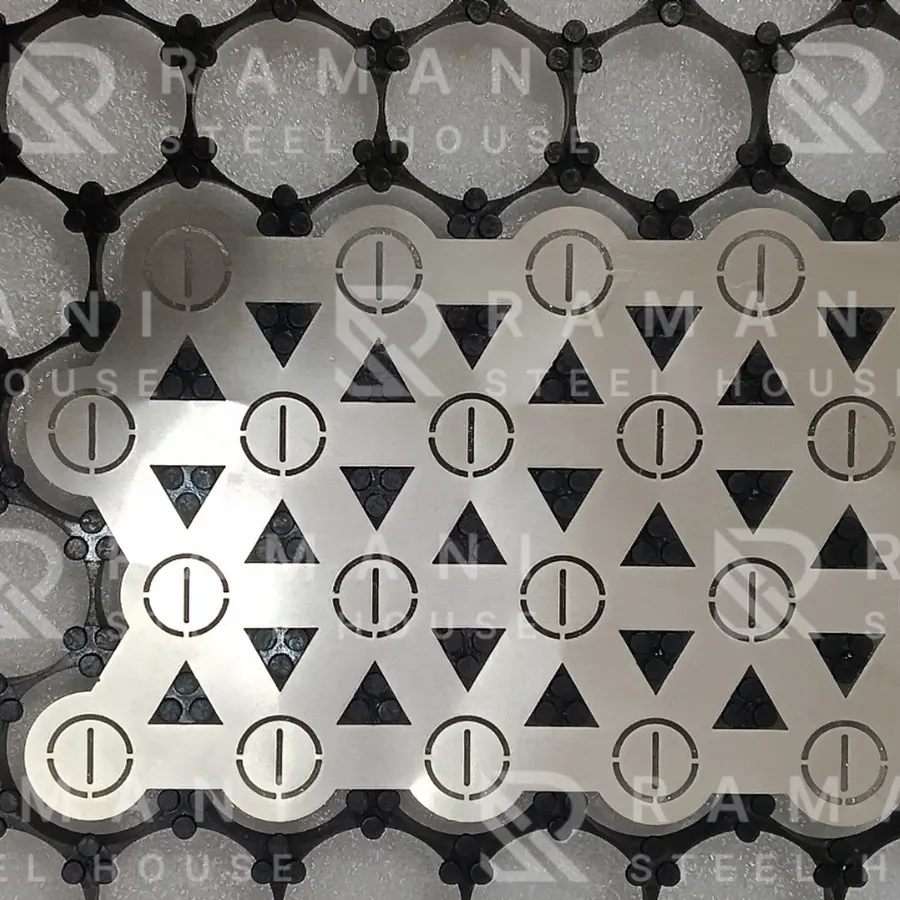 Ni Fuse Type 32700 — Thickness: 0.20mm
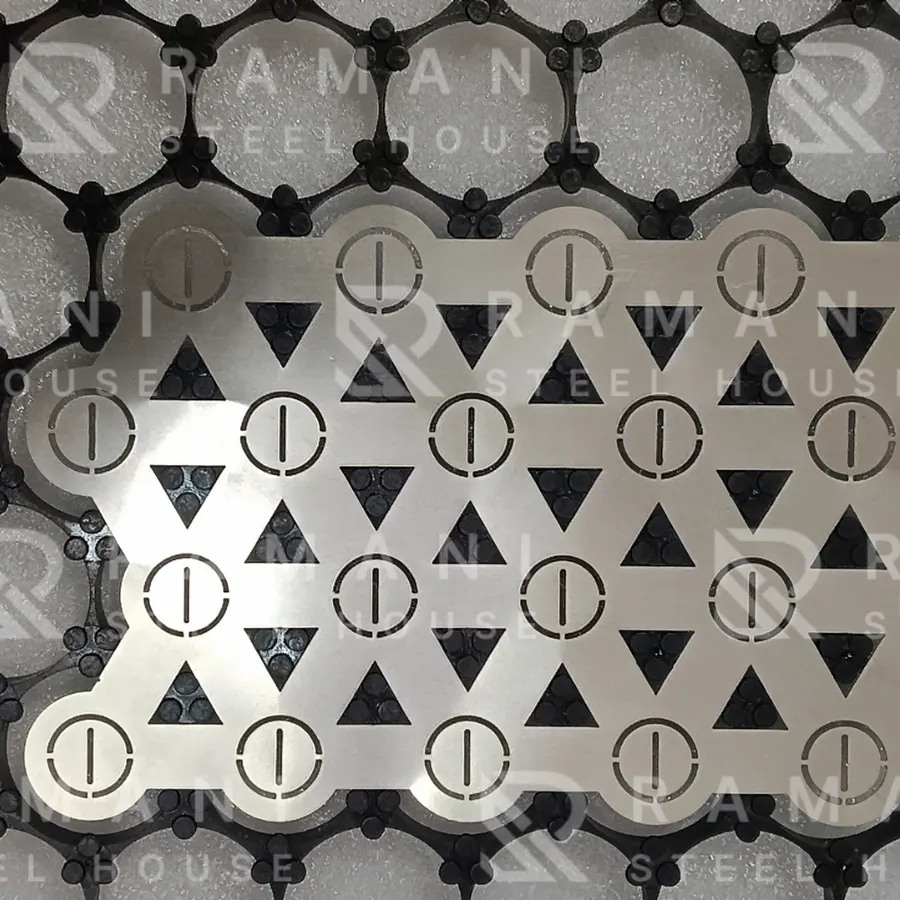 Ni Fuse-Type 18650 — H-Type Honeycomb — Thickness: 0.15mm
Related guides
- Zig-Zag vs H-Type Nickel Strip: Choosing the Right Interconnect Pattern for Your Battery Pack
- Nickel Strip Pricing Guide: What Determines Cost for Bulk Battery Pack Orders
- Nickel Strip vs Copper Busbar: How to Choose the Right Interconnect Material for Lithium-Ion Battery Packs
- Nickel Strip Current Carrying Capacity: An Engineer's Guide to Safe Battery Pack Design
All nickel strip guides and technical articles · Nickel strip and busbar products