Nickel 200 vs Nickel 201: Which Alloy Is Right for Battery-Grade Nickel Strip?
.jpg?token=eyJraWQiOiJzdG9yYWdlLXVybC1zaWduaW5nLWtleV84ODdiMWJmNC1hOWFhLTQ2N2QtYTAwYy0zYTRkZTVjOTFlNWIiLCJhbGciOiJIUzI1NiJ9.eyJ1cmwiOiJJbWFnZXMvUHVyZSBOaWNrZWwgU3RyaXBzICgzKS5qcGciLCJzY29wZSI6ImRvd25sb2FkIiwiaWF0IjoxNzgzNDIzMTMzLCJleHAiOjMwNDQ4NjMxMzN9.CLaXvSxMQnTFMdMT8dckfc5W0toM5A7ggpbS3jO9QL0)
Two nickel strip datasheets can list nearly identical mechanical properties and still describe two different materials. The distinction that matters most for battery interconnects is one that rarely gets its own line item: Nickel 200 vs Nickel 201, and specifically, how much carbon each grade is allowed to contain. Get this wrong on a purchase order and the strip that welds perfectly on day one can embrittle in service months later.
In this guide:
- What "Nickel 200" and "Nickel 201" actually mean in UNS and DIN terms
- The one compositional difference that separates them, and why it exists
- Why most battery-grade interconnect strip is made from the low-carbon (201-type) chemistry
- Where standard Nickel 200 is still the correct, more economical choice
- How to read a nickel strip datasheet or mill test certificate before you order
- Nickel 200 vs Nickel 201: side-by-side comparison
- Common mistakes when specifying nickel strip grade
- FAQ
What Nickel 200 and Nickel 201 Actually Are
Nickel 200 and Nickel 201 are both commercially pure wrought nickel alloys, typically 99.0%+ nickel plus cobalt, with small controlled amounts of iron, manganese, copper, silicon, and carbon. They are close enough in composition that a general materials list might describe both simply as "pure nickel." In standards terms they are distinct grades:
- Nickel 200 — UNS N02200
- Nickel 201 — UNS N02201, commonly cross-referenced to DIN 2.4068 (low-carbon nickel, sometimes labeled LC-Ni99)
On Ramani Steel House's own product data, this split is visible directly: the coil-form Plain Nickel Strip line is specified to UNS N02200 under ASTM B162 (the standard covering nickel plate, sheet, and strip), while the pre-formed interconnect lines — H-type, fuse-type, and zig-zag honeycomb strip built for 18650, 21700, and 32650 cell formats — are specified to UNS N02201 (DIN 2.4068). That is not a marketing distinction; it reflects a real difference in how the two grades behave once heat gets involved.
The One Difference That Matters: Carbon Content
Strip both grades down to their datasheets and the number that actually separates them is carbon. Nickel 200 allows carbon up to roughly 0.15% by weight; Nickel 201 caps it at around 0.02%, per the Nickel Alloy 200/201 datasheet published by Corrosion Materials and consistent with the way both grades are described across nickel alloy producer literature. Every other headline property — density, room-temperature tensile strength, corrosion resistance in most media — is close enough between the two that a spec sheet skim can miss the difference entirely.
That small carbon allowance becomes a real engineering issue above roughly 315°C (600°F). At and above that temperature, carbon in solution in Nickel 200 can precipitate out at the grain boundaries as graphite — a process called graphitization. The resulting intergranular graphite network embrittles the metal: it does not necessarily change how the part looks, but it reduces ductility and toughness, and it does so quietly, since nothing about the strip's appearance signals that it happened. Nickel 201, with an order-of-magnitude less carbon available to precipitate, resists this degradation and stays serviceable at higher sustained temperatures.
This is why the distinction is described in industry literature as a high-temperature stability question rather than a room-temperature strength question — for parts that never see sustained heat, the two grades can be difficult to tell apart in service.
Why This Is Not Just an Academic Distinction for Battery Strip
A nickel interconnect strip does not sit at room temperature for its whole life. Consider the thermal events a tab or busbar strip actually goes through:
- Resistance/spot welding — each weld nugget briefly reaches temperatures well above the melting point of nickel at the weld zone itself, and the surrounding heat-affected zone sees a steep but real temperature gradient, repeated at every weld point across a multi-cell interconnect.
- Fast-charge and high-discharge duty cycles — packs designed for high C-rate charging run hotter at the interconnect than a lightly loaded pack, especially at joints where contact resistance adds localized I²R heating.
- Abuse and thermal-runaway propagation testing — UL 1642, UL 2580, and IEC 62133 abuse protocols intentionally push cells and their interconnects toward and beyond normal operating temperature to verify the pack does not propagate failure; an interconnect that embrittles under that exposure changes the failure mode being tested.
- Post-weld anneal or stress-relief steps some manufacturers apply to formed H-type or honeycomb strip to relax cold-work from stamping.
None of these are unusual or edge-case conditions for a production battery pack — they are the normal life of an interconnect. That is the practical reason low-carbon, UNS N02201-grade chemistry is the more common choice specifically for pre-formed, weld-ready battery strip, rather than an upgrade reserved for exotic applications.
Where Standard Nickel 200 Is Still the Right Choice
None of this makes Nickel 200 an inferior or obsolete grade — it is simply suited to different conditions. Standard UNS N02200 chemistry, produced to ASTM B162, remains the correct and more widely available choice when:
- You are buying coil-form strip to slit, stamp, or form under your own controlled process, and can specify heat treatment and weld parameters yourself.
- The finished assembly will not see sustained temperatures near or above 315°C (600°F) in normal use, testing, or your worst-case fault scenario.
- Cost and lead time matter more than the last margin of high-temperature stability, and your welding process is already well characterized on that chemistry.
- The application is general-purpose — chemical process equipment, general electrical contacts, or non-battery interconnects — where graphitization risk was never a design driver in the first place.
In short: Nickel 200 is the workhorse grade; Nickel 201 is the version you reach for when carbon-driven embrittlement risk is on the table. For a deeper look at how strip thickness and cross-section affect current-carrying performance once you've settled on a grade, see our guide to nickel strip current carrying capacity.
How to Read a Nickel Strip Datasheet or Mill Test Certificate
Grade names alone are not verification. "Low carbon nickel" printed on a packing slip is a claim, not a spec. Before you accept a shipment against either grade, check the following on the actual mill test certificate (MTC):
- Reported carbon percentage — a real number, not just a grade label. For UNS N02201 material, that number should sit at or below roughly 0.02%.
- UNS or equivalent designation — N02200 or N02201 (or the DIN 2.4068 cross-reference) stated explicitly, not implied by a generic "pure nickel" description.
- Governing specification — the ASTM (or equivalent) standard the strip was produced and tested against, matching what your drawing or purchase order actually calls out.
- Dimensional tolerances — thickness and width tolerance, since the carbon-grade question is independent of, but often listed alongside, gauge control.
- Batch/heat traceability — a heat or lot number tying the certificate to the physical coil or strip in hand, so a later failure investigation can trace back to actual chemistry rather than a nominal spec.
If a supplier cannot produce an MTC with an actual carbon figure on request, treat the "low carbon" claim as unverified until they can.
Nickel 200 vs Nickel 201: Side-by-Side Comparison
Property                    Nickel 200 (UNS N02200)     Nickel 201 (UNS N02201)
---------------------------------------------------------------------------
Nominal composition         ~99% Ni + Co, commercially   Same base chemistry,
                             pure wrought nickel          low-carbon variant
Max carbon content          ~0.15%                        ~0.02%
High-temp (>315C) stability Prone to graphitization       Resists graphitization
Typical form on this site   Coil-form Plain Nickel        Pre-formed H-type,
                             Strip (ASTM B162)             fuse-type, zig-zag
                                                            honeycomb strip
Best fit                    General-purpose strip,        Weld-heavy, high-duty,
                             user-controlled fabrication   or abuse-tested
                                                            battery interconnects
Relative availability       Broadly available              Common for
                                                             battery-grade strip
                                                             specifically
Treat this table as a starting point for a conversation with your supplier, not a substitute for the certificate check described above — actual composition on a given heat can vary within the allowed range, and your specific abuse-testing or duty-cycle requirements should drive the final call.
Common Mistakes When Specifying Nickel Strip Grade
Assuming "pure nickel" on a quote means a specific UNS grade
"99% pure nickel strip" is a true statement about both N02200 and N02201. It tells you nothing about carbon content or high-temperature behavior. Always ask for the UNS designation or DIN cross-reference explicitly.
Copying a coil-form spec onto a pre-formed interconnect order
If your team has historically bought Nickel 200 coil for internal fabrication and is now sourcing pre-formed H-type or fuse-type strip from an outside supplier, re-evaluate the grade rather than carrying the old spec forward — the duty cycle (repeated localized welding heat) is different from what drove the original choice.
Treating grade selection as a substitute for thermal design
Choosing UNS N02201 reduces embrittlement risk at elevated temperature; it does not raise the strip's current-carrying capacity or change its room-temperature resistivity. Ampacity and thermal margin still need to be sized independently — our interconnect sizing calculator is built for that part of the job.
Skipping certificate verification on repeat orders
A supplier that shipped correctly specified N02201 strip on order one can still ship out-of-spec material on order five if incoming inspection stops checking. Carbon content is not visually detectable — it only shows up on the MTC or in a lab report.
Ignoring the surface/plating question separately from the alloy question
Grade (200 vs 201) and surface finish (bright, matte, nickel-plated steel core, etc.) are two independent specifications. Confirming one does not confirm the other — see our surface finish guide if finish is also part of your spec.
Grade selection is a small line item on a purchase order that has an outsized effect on how an interconnect performs after thousands of weld cycles and years of field service. If you're specifying nickel strip for a new pack design and want help matching the right UNS grade, form, and thickness to your welding process and duty cycle, contact our engineering team or request a quote with your application details.
Frequently Asked Questions
Is Nickel 201 simply a "better" grade than Nickel 200?
Not better — more specialized. Nickel 201 trades a slightly tighter (and typically costlier) carbon specification for high-temperature stability that Nickel 200 does not guarantee above about 315°C (600°F). For applications that never approach that temperature, Nickel 200 performs equivalently at lower cost.
Can I substitute Nickel 200 for Nickel 201 on an existing battery interconnect design to save cost?
Only after checking your actual worst-case thermal exposure, including weld heat-affected zones and any abuse-test requirements (UL 1642, UL 2580, IEC 62133, or your customer's internal protocol). If that exposure stays comfortably below the graphitization threshold, the substitution may be viable — but validate it with testing rather than assumption, since local weld temperatures are hard to estimate from nameplate duty alone.
Does the carbon difference between Nickel 200 and Nickel 201 show up in a visual or dimensional inspection?
No. Carbon content is a chemistry attribute, not a dimensional or cosmetic one. The only reliable way to confirm it is a mill test certificate with a reported carbon percentage, or independent lab analysis such as combustion carbon analysis.
Why does Ramani Steel House use different UNS grades for plain strip versus H-type/fuse-type strip?
Coil-form Plain Nickel Strip is typically fabricated further by the customer under their own process, so standard UNS N02200 (ASTM B162) chemistry is offered as the broadly available baseline. Pre-formed interconnects that arrive weld-ready — H-type, fuse-type, and zig-zag honeycomb strip — are specified in UNS N02201 (DIN 2.4068) low-carbon chemistry, consistent with the repeated localized welding heat those parts see in normal use.
Where can I see the actual grade specified for a given nickel strip product?
Each product page lists its governing specification and UNS value directly — browse the current lineup on the products page or check a specific listing such as the Plain Nickel Strip page.
What should I ask a new nickel strip supplier before placing a first order?
Ask for the UNS designation and a sample mill test certificate with actual carbon content reported, not just a grade name; confirm the governing ASTM (or equivalent) specification; and request a small sample lot for your own weld and, if relevant, thermal-exposure validation before committing to volume.
Products covered in this article
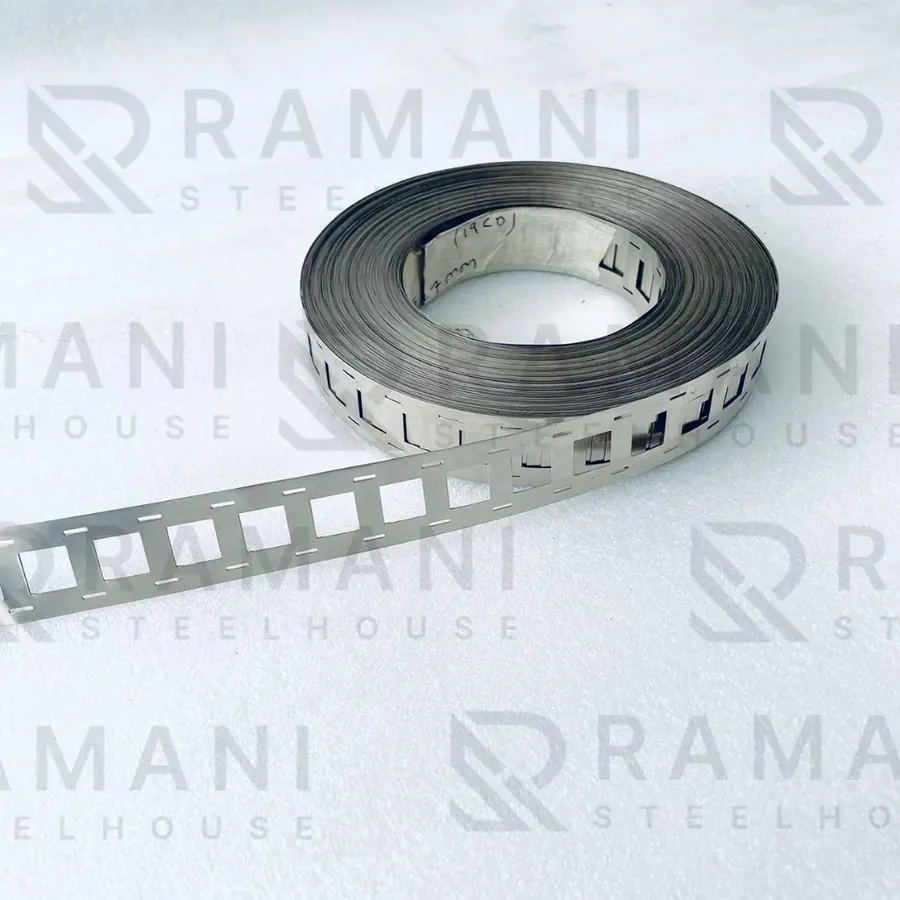 21700 2P H-type — Thickness: 0.20mm
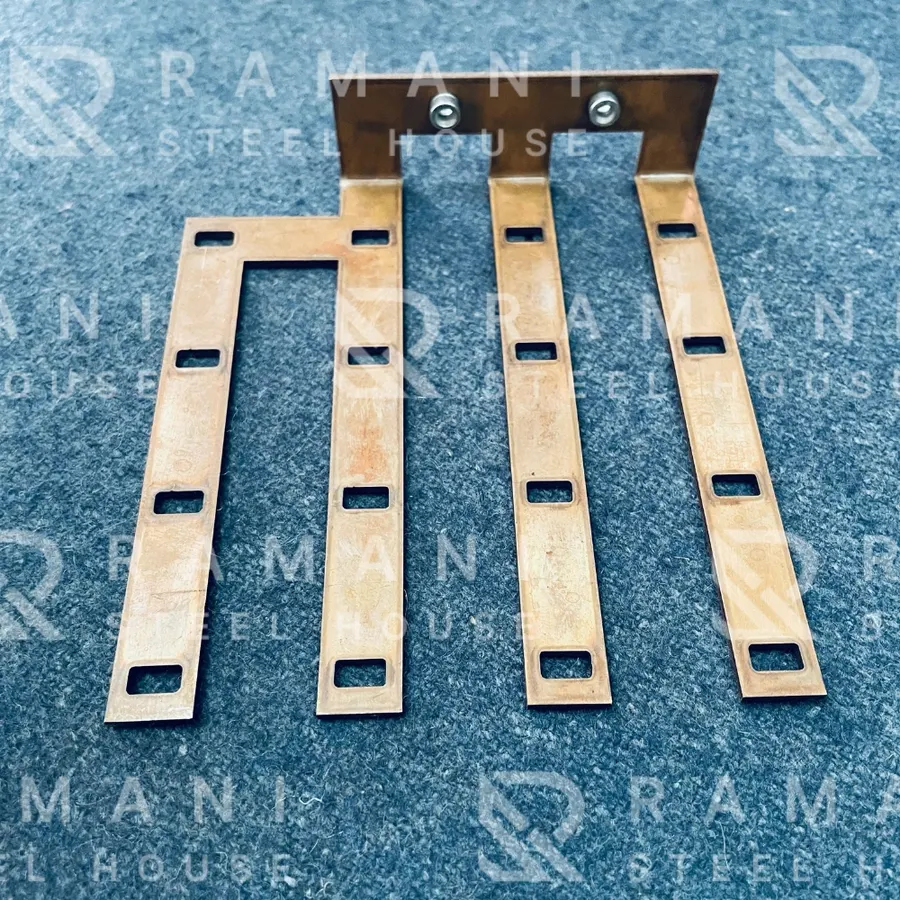 Copper Busbar
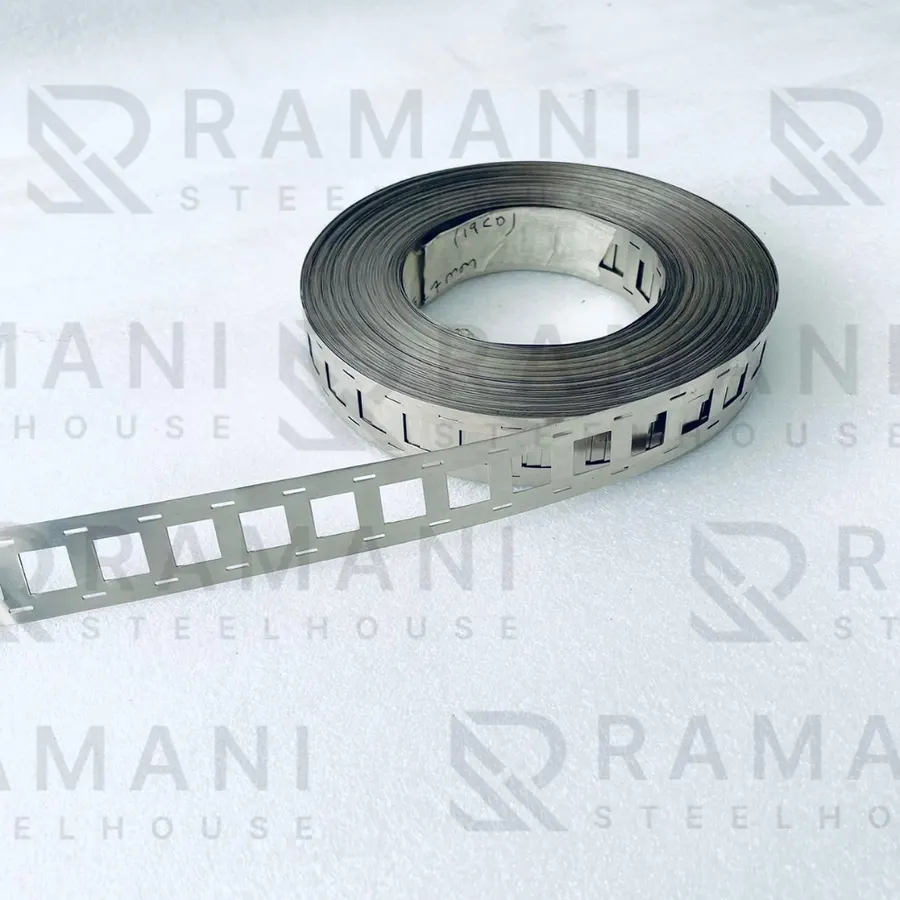 Ni 18650 2P H-Type Fuse Nickel Strip — Thickness: 0.15mm
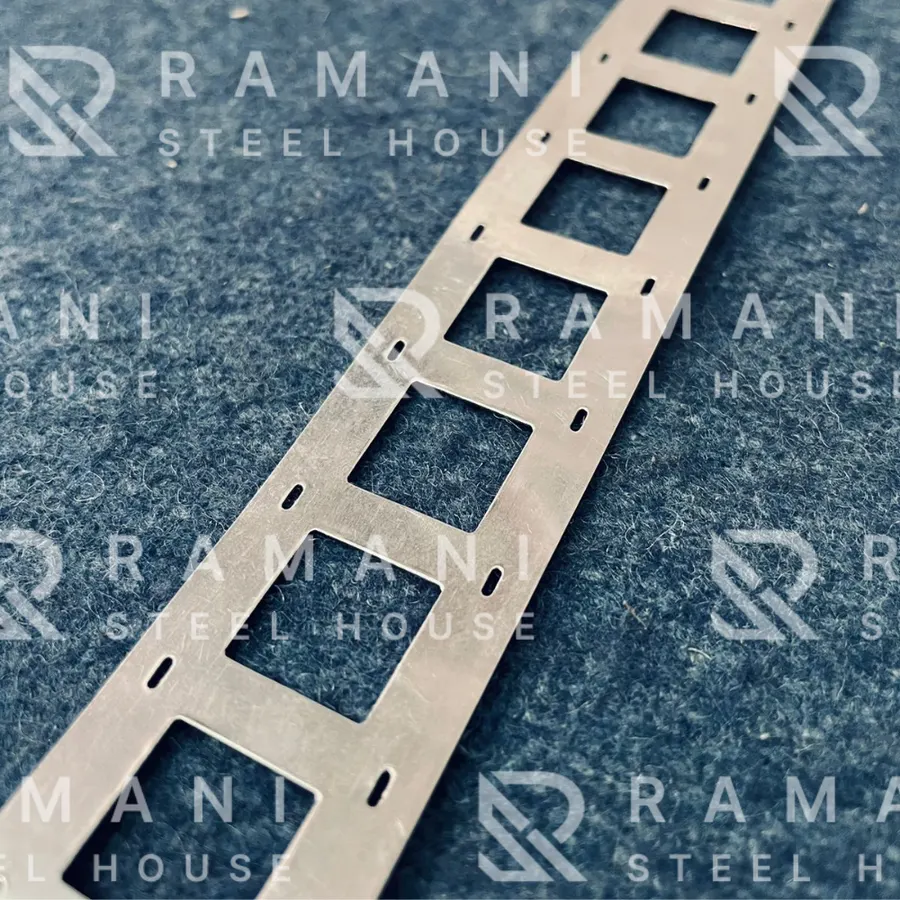 Ni 18650 2P H-Type Nickel Strip — Thickness: 0.15mm
Related guides
- Zig-Zag vs H-Type Nickel Strip: Choosing the Right Interconnect Pattern for Your Battery Pack
- Nickel Strip vs Copper Busbar: How to Choose the Right Interconnect Material for Lithium-Ion Battery Packs
- Nickel Strip Pricing Guide: What Determines Cost for Bulk Battery Pack Orders
- Nickel Strip Surface Finish Guide: Bright, Matte, and Nickel-Plated Explained
All nickel strip guides and technical articles · Nickel strip and busbar products