Nickel Strip Weight per Metre: Chart, Formula and kg-to-Metre Conversion
Nickel strip is priced by the kilogram, but it is used by the metre. A buyer knows their pack needs a certain length of 0.15 mm × 8 mm strip per build; the quotation comes back per kg. Converting between the two is the step where most small orders go wrong — either too little strip arrives to finish the run, or several kilograms more than needed sit on the shelf oxidising.
This guide gives the weight per metre of pure nickel strip in the common sizes, the formula behind it so you can check any size yourself, and worked examples for turning a pack design into a kilogram figure you can order against.
The formula for nickel strip weight per metre
Weight is volume multiplied by density. For a strip one metre long:
Weight per metre (g) = Thickness (mm) × Width (mm) × 8.89
The 8.89 is the density of pure nickel in g/cm³, and it holds for both Nickel 200 and Nickel 201 — the two grades used for battery strip. The formula works because a strip 1 mm thick, 1 mm wide and 1,000 mm long has a volume of exactly 1 cm³, so thickness × width in millimetres gives the volume of one metre in cm³ directly.
To go the other way, from a kilogram to a length:
Metres per kg = 1,000 ÷ (Thickness × Width × 8.89)
Worked example: 0.15 mm × 8 mm
0.15 × 8 × 8.89 = 10.67 g per metre. One kilogram is therefore 1,000 ÷ 10.67 = about 93.7 metres, and a single 100 mm piece weighs about 1.07 g.
0.15 mm × 8 mm is one of the most widely used sizes for 18650 pack assembly, which is why it is the default in our nickel strip weight calculator.
Nickel strip weight per metre chart
Pure nickel (Nickel 200 / 201, 8.89 g/cm³), solid strip, nominal dimensions. Figures are rounded; use the formula or the calculator for anything not listed.
0.10 mm nickel strip
- 0.10 × 5 mm: 4.45 g per metre · about 225 metres per kg
- 0.10 × 8 mm: 7.11 g per metre · about 140.6 metres per kg
- 0.10 × 10 mm: 8.89 g per metre · about 112.5 metres per kg
- 0.10 × 12 mm: 10.67 g per metre · about 93.7 metres per kg
- 0.10 × 15 mm: 13.34 g per metre · about 75 metres per kg
0.12 mm nickel strip
- 0.12 × 5 mm: 5.33 g per metre · about 187.5 metres per kg
- 0.12 × 8 mm: 8.53 g per metre · about 117.2 metres per kg
- 0.12 × 10 mm: 10.67 g per metre · about 93.7 metres per kg
- 0.12 × 12 mm: 12.8 g per metre · about 78.1 metres per kg
- 0.12 × 15 mm: 16 g per metre · about 62.5 metres per kg
0.15 mm nickel strip
- 0.15 × 5 mm: 6.67 g per metre · about 150 metres per kg
- 0.15 × 8 mm: 10.67 g per metre · about 93.7 metres per kg
- 0.15 × 10 mm: 13.34 g per metre · about 75 metres per kg
- 0.15 × 12 mm: 16 g per metre · about 62.5 metres per kg
- 0.15 × 15 mm: 20 g per metre · about 50 metres per kg
0.20 mm nickel strip
- 0.20 × 5 mm: 8.89 g per metre · about 112.5 metres per kg
- 0.20 × 8 mm: 14.22 g per metre · about 70.3 metres per kg
- 0.20 × 10 mm: 17.78 g per metre · about 56.2 metres per kg
- 0.20 × 12 mm: 21.34 g per metre · about 46.9 metres per kg
- 0.20 × 15 mm: 26.67 g per metre · about 37.5 metres per kg
0.25 mm nickel strip
- 0.25 × 5 mm: 11.11 g per metre · about 90 metres per kg
- 0.25 × 8 mm: 17.78 g per metre · about 56.2 metres per kg
- 0.25 × 10 mm: 22.23 g per metre · about 45 metres per kg
- 0.25 × 12 mm: 26.67 g per metre · about 37.5 metres per kg
- 0.25 × 15 mm: 33.34 g per metre · about 30 metres per kg
0.30 mm nickel strip
- 0.30 × 5 mm: 13.34 g per metre · about 75 metres per kg
- 0.30 × 8 mm: 21.34 g per metre · about 46.9 metres per kg
- 0.30 × 10 mm: 26.67 g per metre · about 37.5 metres per kg
- 0.30 × 12 mm: 32 g per metre · about 31.2 metres per kg
- 0.30 × 15 mm: 40.01 g per metre · about 25 metres per kg
Two patterns are worth noticing in the chart. Weight scales exactly with each dimension, so doubling the width doubles the weight per metre, and 0.30 mm strip weighs twice what 0.15 mm does at the same width. And different sizes with the same cross-section weigh the same: 0.10 × 12 mm, 0.12 × 10 mm and 0.15 × 8 mm are all 10.67 g per metre, because each has a 1.2 mm² cross-section.
How to work out how many kilograms to order
Start from the pack, not from the coil:
- Measure the strip per pack. Add up every length of strip in one finished pack — series links, parallel links and any tabs — in metres.
- Multiply by the number of packs in the run, and add an allowance for trimming and setup.
- Multiply the total length by the weight per metre of your size, from the chart above.
For example, a pack that uses 6 metres of 0.15 × 8 mm strip uses 6 × 10.67 = about 64 g per pack. A 5 kg order therefore covers roughly 78 packs.
Working backwards is the same calculation reversed: 2.5 kg of 0.20 × 10 mm strip is 2,500 ÷ 17.78 = about 141 metres.
What a 5 kg order gives you in metres
Our minimum order is 5 kg — see why nickel strip minimum orders are set where they are. In the common sizes, that is:
- 0.10 × 8 mm: about 703 metres
- 0.12 × 8 mm: about 586 metres
- 0.15 × 8 mm: about 469 metres
- 0.15 × 10 mm: about 375 metres
- 0.20 × 10 mm: about 281 metres
- 0.20 × 15 mm: about 187 metres
- 0.30 × 12 mm: about 156 metres
When the real weight differs from the calculation
The formula gives the weight of solid strip at its nominal size. Three things move the real figure:
- Patterned strip weighs less per metre. H-type, zig-zag and fuse-type strip have material punched out between the cell contacts, so a metre of H type nickel strip weighs less than a metre of solid strip of the same width and thickness. How much less depends on the pattern, so for patterned strip ask for the weight per piece of your specific design.
- Thickness tolerance. Weight is directly proportional to thickness, so strip at the top of its tolerance band weighs proportionally more per metre than the nominal figure, and strip at the bottom weighs less. On large orders, check the tolerance on the quotation as well as the nominal size.
- Nickel-plated steel is lighter. Plated steel strip has a steel core of about 7.85 g/cm³, so it is roughly 12% lighter than pure nickel of the same size — 0.15 × 8 mm plated steel is about 9.42 g per metre, or 106 metres per kg. A price per kg for plated strip therefore buys more metres, which is worth remembering when comparing quotations. For the performance side of that comparison, see pure nickel vs nickel-plated steel strip.
Choosing the size in the first place
Weight follows from the size, but the size should follow from the current your pack carries and the welder you use — not from the weight. Our guides to choosing nickel strip thickness and nickel strip current carrying capacity cover that decision. Once you know the size, the weight calculator converts any length, piece count or weight for you, in millimetres or inches.
Ramani Steel House manufactures pure nickel strip in Mumbai in standard thicknesses from 0.10 to 0.30 mm and widths from 2 to 50 mm, and makes other sizes and new patterns to your drawing. Orders start at 5 kg. Browse nickel strip or send us your size and quantity for a quotation.
Frequently Asked Questions
How much does nickel strip weigh per metre?
Multiply thickness × width in mm by 8.89, the density of pure nickel. For example, 0.15 mm × 8 mm nickel strip weighs about 10.67 g per metre, and 0.20 mm × 10 mm weighs about 17.78 g per metre.
How many metres of nickel strip are in 1 kg?
Divide 1,000 by the weight per metre in grams. 1 kg of 0.15 mm × 8 mm pure nickel strip is about 94 metres; 1 kg of 0.20 mm × 10 mm is about 56 metres.
What is the density of nickel strip?
Pure nickel strip in Nickel 200 or Nickel 201 has a density of about 8.89 g/cm³. Nickel-plated steel strip is lighter, at about 7.85 g/cm³, because its core is steel.
How much nickel strip is 5 kg?
It depends on the size: 5 kg of 0.15 mm × 8 mm strip is about 469 metres, and 5 kg of 0.20 mm × 10 mm is about 281 metres.
Does H type nickel strip weigh the same as plain strip?
No. H-type and other patterned strips have material punched out between the cell contacts, so they weigh less per metre than solid strip of the same width and thickness. The difference depends on the pattern, so ask for the weight per piece of your specific design.
Products covered in this article
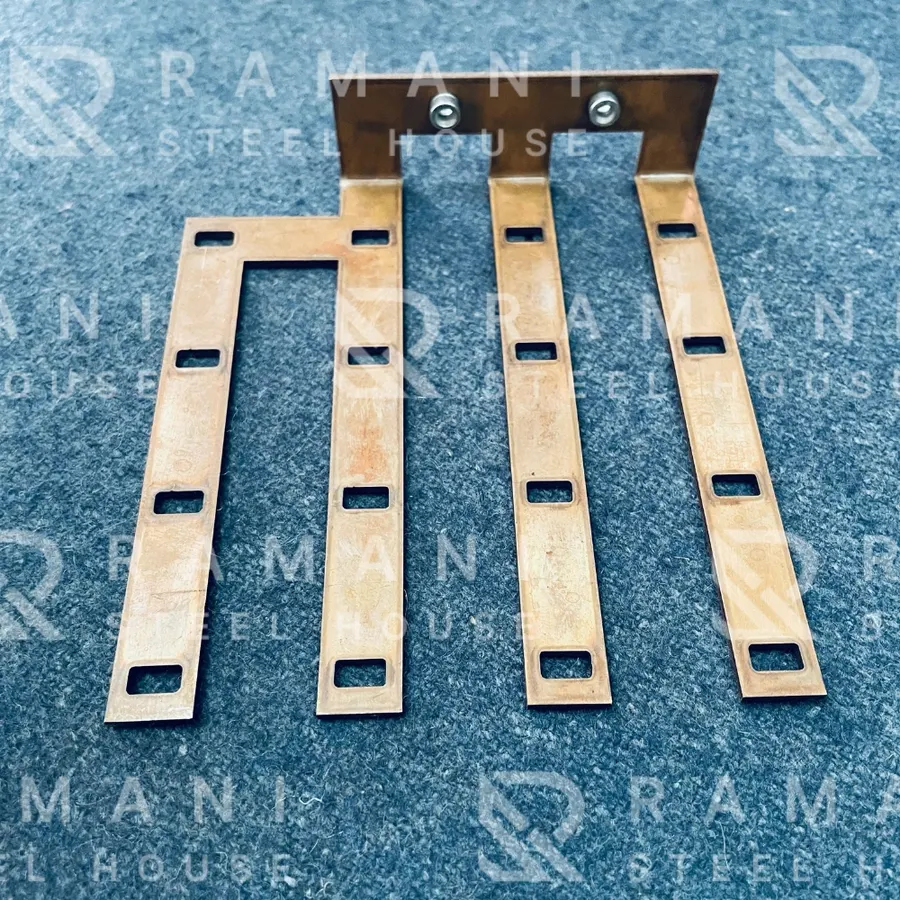 Copper Busbar
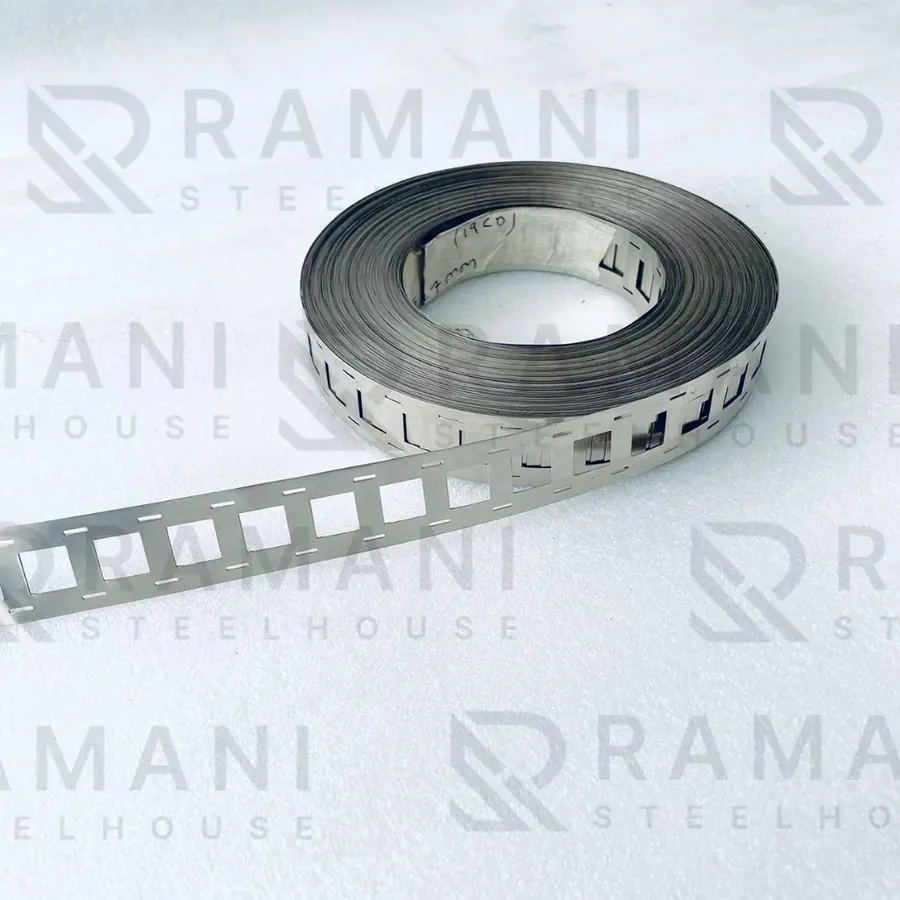 21700 2P H-type — Thickness: 0.20mm
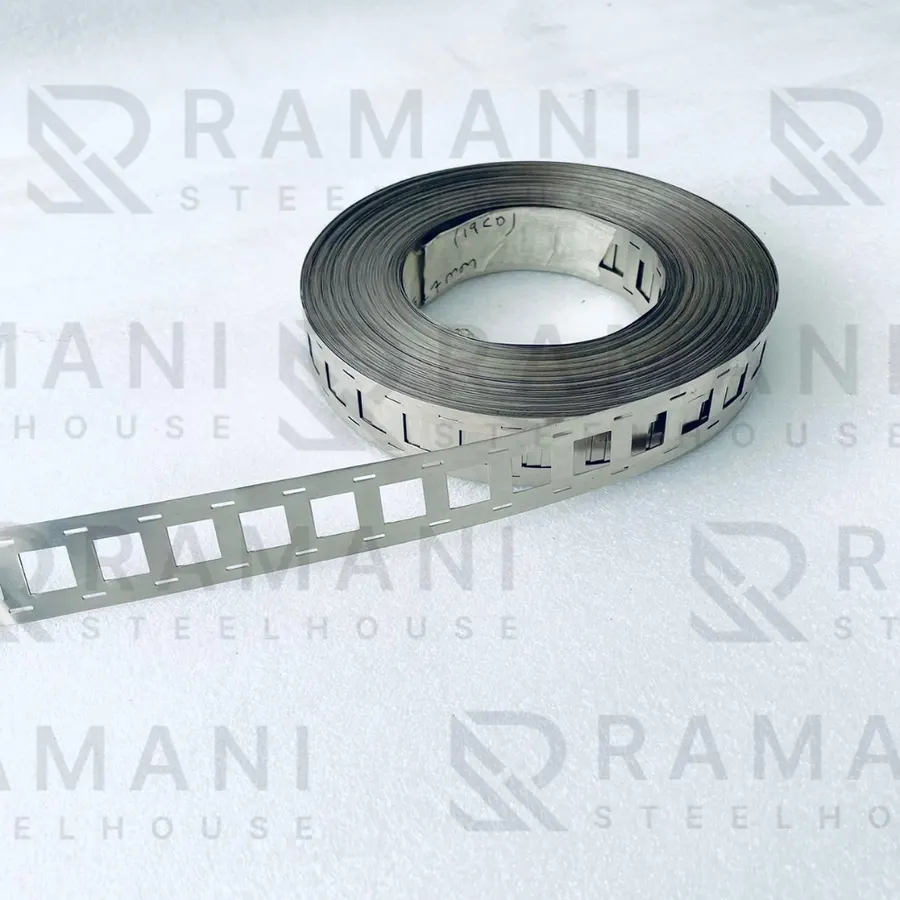 Ni 18650 2P H-Type Fuse Nickel Strip — Thickness: 0.15mm
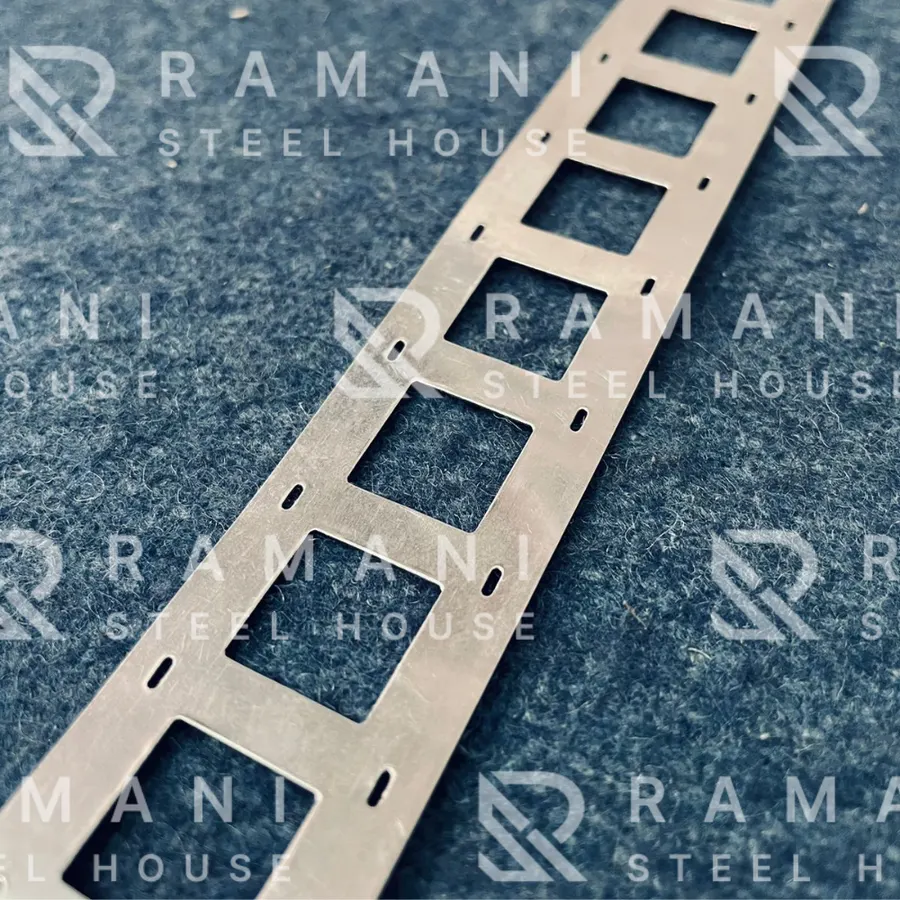 Ni 18650 2P H-Type Nickel Strip — Thickness: 0.15mm
Related guides
- Nickel Strip Price per Kg in India: What Moves It in 2026
- Nickel Strip vs Copper Busbar: How to Choose the Right Interconnect Material for Lithium-Ion Battery Packs
- How to Read a Nickel Strip Material Test Certificate
- Nickel Strip Samples: How to Test Before a Bulk Order
All nickel strip guides and technical articles · Nickel strip and busbar products