5 Nickel Strip Buying Mistakes That Cost Battery Pack Makers Money
Nickel strip looks like a commodity. It is quoted per kilogram, the specifications fit on one line, and a dozen suppliers will send a number within a day. That is exactly why buying it badly is so easy — and why the cost usually shows up somewhere other than the invoice: in scrapped cells, in a re-order that delays a run, or in weld failures nobody traces back to the material.
These are the five mistakes we see most often on enquiries, what each one actually costs, and how to avoid it.
| Mistake | What it costs | The fix |
|---|---|---|
| Comparing price per kg across different materials | Paying more per metre while thinking you paid less | Compare per metre, at one specification |
| Ordering weight without converting to length | A short order that stops a run, or dead stock | Convert kg to metres before ordering |
| Reusing a stamped pattern on a new cell format | A whole lot of strip that will not align | Re-check the pitch whenever the cell changes |
| Copying a thickness from someone else's pack | Overheated joints, or welds your machine cannot make | Size from your current and your welder |
| Accepting purity without a test certificate | Higher resistance and heat, found only in service | Ask for the MTC for your batch |
1. Comparing price per kilogram across different materials
Nickel strip is sold by weight and used by length, and the two materials on the market have different densities. Pure nickel is 8.89 g/cm³; nickel-plated steel is about 7.85 g/cm³, because its core is steel.
That means a kilogram of plated steel strip contains roughly 13% more metres than a kilogram of pure nickel in the same size. At 0.15 × 8 mm, 1 kg of pure nickel is about 94 metres, while 1 kg of plated steel is about 106 metres. A plated quote that looks 10% cheaper per kilogram can be more expensive per metre once you convert — and it is the metres that build packs.
The two are not interchangeable anyway. Plated steel has a resistive steel core and a plating layer that makes welds less repeatable, which is why pure nickel is preferred wherever conductivity or weld consistency matters. See pure nickel strip vs nickel-plated steel strip for the performance comparison.
How to avoid it: ask every supplier to quote the same thickness, width, material and pattern, then divide by the weight per metre to compare cost per metre. Our nickel strip pricing guide covers what else moves the number.
2. Ordering a weight without working out the length
This is the most common cause of a second, urgent order. A buyer knows the pack needs a certain length of strip and orders "5 kg" because that is the minimum, without checking what 5 kg of their size actually comes to.
The conversion is simple: weight per metre in grams is thickness × width in mm × 8.89. A 0.15 × 8 mm strip is 10.67 g per metre, so 5 kg is about 469 metres. The same 5 kg in 0.20 × 15 mm is only about 187 metres — less than half, for the same money and the same box.
How to avoid it: work out the strip length in one finished pack, multiply by the number of packs, add an allowance for trimming, then convert to kilograms. The weight per metre chart lists the common sizes, and the weight calculator does it either way round.
3. Reusing a stamped pattern after changing cell format
A stamped strip — H-type, zig-zag or fuse-type — is cut to a fixed cell pitch. Move a pack from 18650 to 21700 and the cell centres move further apart, so a strip stamped for 18650 drifts out of alignment within a few cells. It cannot be stretched to fit, and a whole lot becomes scrap.
The cell change usually raises current per weld too, so the thickness that worked before may no longer be right. See what changes when you switch cell format.
How to avoid it: treat a cell change as a new specification, not a repeat order. Send the new cell layout or drawing and have the pattern cut to it.
4. Copying a thickness from someone else's pack
Thickness gets copied from a competitor's teardown, a forum post or the last project, rather than derived. There is no universal amp rating for nickel strip: capacity depends on thickness, width, the length of the current path between welds, cooling and duty cycle — see nickel strip current carrying capacity.
Copying too thin overheats the joints under load. Copying too thick is just as expensive a mistake in a different direction: thicker strip needs more weld energy, and a welder comfortable with 0.15 mm may produce shallow, high-resistance joints on 0.25 mm without any change being visible. Most 18650 packs sit at 0.15 mm, moving to 0.20 mm for higher-drain designs, but that is a starting point, not an answer. Our thickness guide works through it.
How to avoid it: size the strip from your pack current, then confirm your welder can deliver the energy that gauge needs. Tell the supplier both when you enquire.
5. Accepting a purity claim without a test certificate
"Pure nickel" is not a specification. Commercially pure grades Nickel 200 and Nickel 201 (UNS N02200 and N02201) specify a minimum of 99.0% nickel, and anything at or above that can be described as pure. Purity also varies from material to material, so the figure on a website is not necessarily the figure in your batch.
Lower purity means higher resistivity, which means more heat at the same current — and that is found in service, not at goods-in. See why nickel purity matters.
How to avoid it: ask for the material test certificate for the batch you are being supplied, not a generic specification sheet. Ramani Steel House supplies 99.8% pure nickel strip with an MTC on request, so the figure can be checked against the batch rather than taken on trust. The rest of the supplier checklist is in how to choose a nickel strip manufacturer in India.
What a good enquiry looks like
Most of these mistakes disappear if the enquiry carries the right information in the first place. Send:
- Thickness and width in mm, or the drawing
- The cell format and pack layout, if the strip is patterned
- Quantity — in metres or kilograms, either is fine once you know both
- Whether you need a material test certificate
- The destination, if it is an export order
Ramani Steel House manufactures pure nickel strip and busbar in Mumbai, in standard thicknesses from 0.10 to 0.30 mm and widths from 2 to 50 mm, with other sizes and new patterns made to drawing. Orders start at 5 kg. Browse nickel strip or send your specification for a quotation.
Frequently Asked Questions
Is nickel-plated steel strip cheaper than pure nickel strip?
Per kilogram it usually is, but plated steel is lighter, so a kilogram contains about 13% more metres. Compare cost per metre, not per kilogram. Plated steel also has a resistive steel core and welds less consistently, so it is not a like-for-like substitute in high-drain packs.
How many metres of nickel strip is 5 kg?
It depends entirely on the size. 5 kg of 0.15 × 8 mm pure nickel strip is about 469 metres, while 5 kg of 0.20 × 15 mm is only about 187 metres. Work out weight per metre as thickness × width in mm × 8.89 before ordering.
Can I use 18650 nickel strip on a 21700 pack?
No, not if it is stamped. A stamped strip is cut to a fixed cell pitch, and 21700 cells sit further apart, so the offset accumulates across the row and the strip stops aligning within a few cells. Plain strip cut to length is unaffected.
What thickness of nickel strip should I order?
Size it from your pack current and the welder you have, not from another pack. Most 18650 packs use 0.15 mm, moving to 0.20 mm for higher-drain designs, but thicker strip needs more weld energy, so confirm your welder can deliver it before ordering.
How do I verify nickel strip purity?
Ask for the material test certificate for your batch rather than a generic specification sheet. Nickel 200 and Nickel 201 specify a minimum of 99.0% nickel, so "pure nickel" alone does not tell you the assay. Ramani Steel House supplies 99.8% pure nickel with an MTC on request.
Products covered in this article
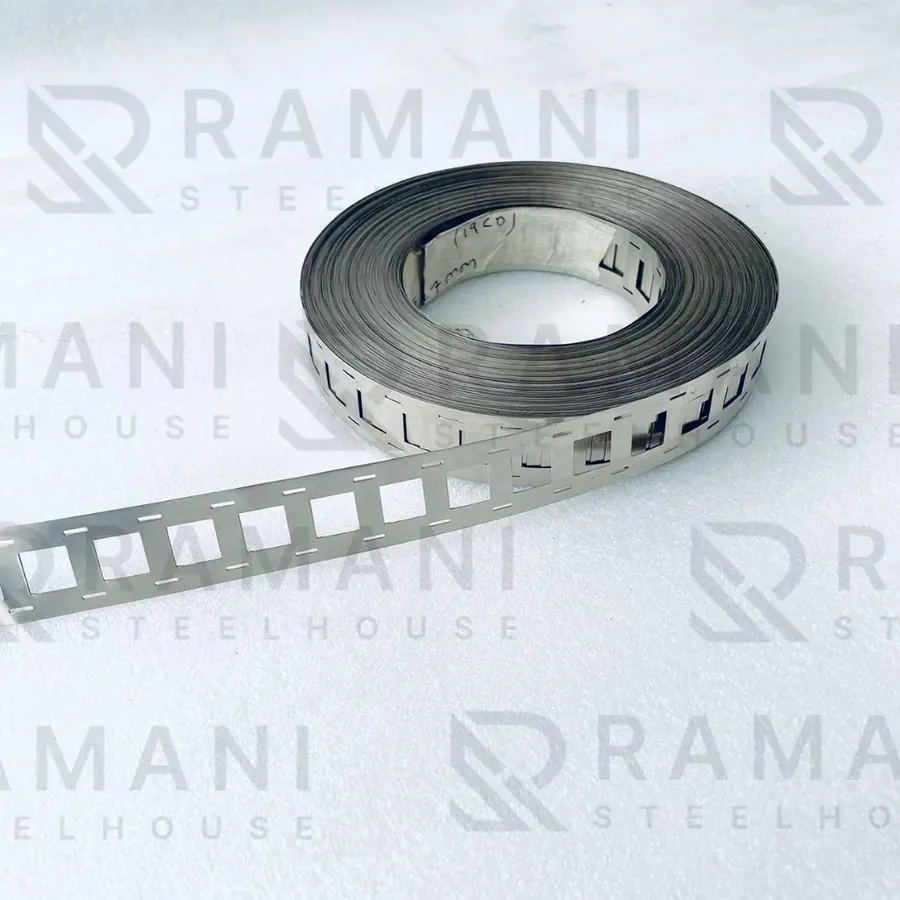 21700 2P H-type — Thickness: 0.20mm
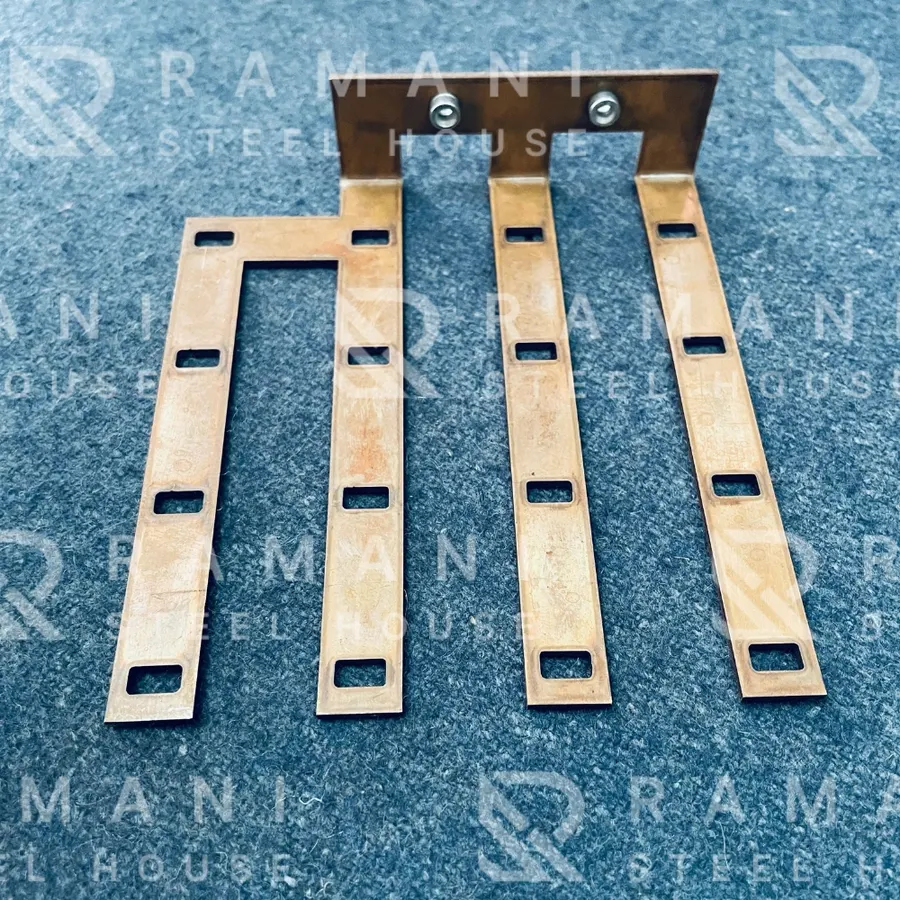 Copper Busbar
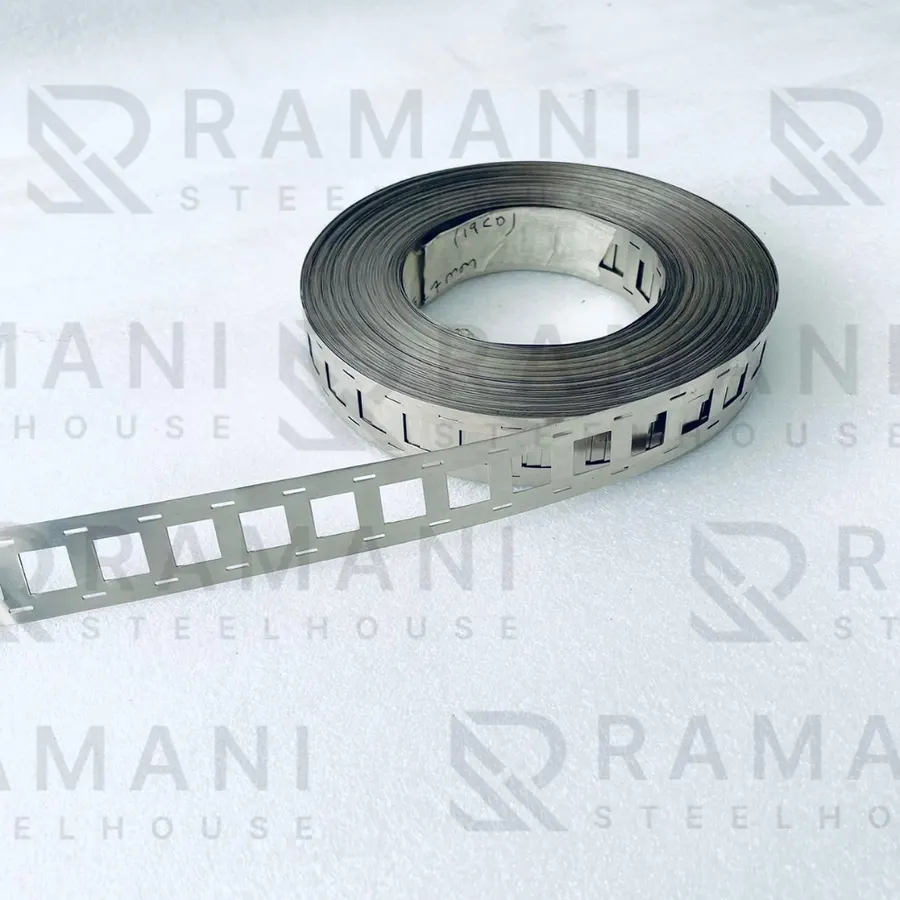 Ni 18650 2P H-Type Fuse Nickel Strip — Thickness: 0.15mm
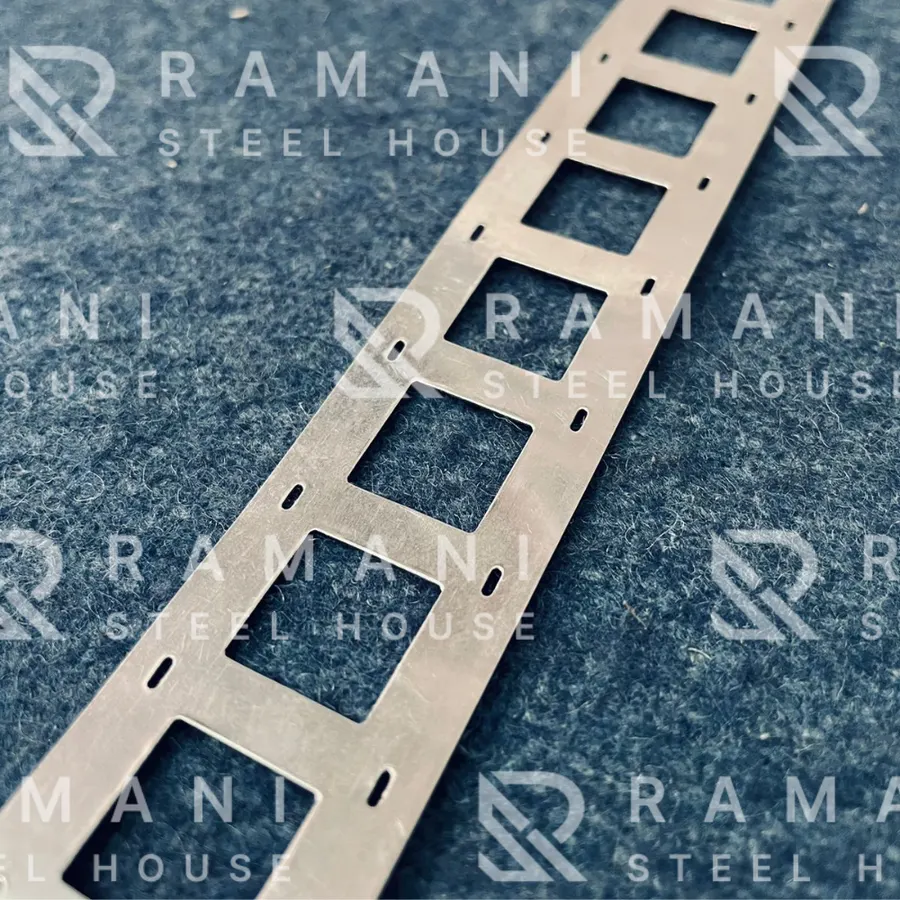 Ni 18650 2P H-Type Nickel Strip — Thickness: 0.15mm
Related guides
- Nickel Strip Pricing Guide: What Determines Cost for Bulk Battery Pack Orders
- Zig-Zag vs H-Type Nickel Strip: Choosing the Right Interconnect Pattern for Your Battery Pack
- Nickel Strip vs Copper Busbar: How to Choose the Right Interconnect Material for Lithium-Ion Battery Packs
- Fuse-Type vs Plain Nickel Strip: When Does a Battery Pack Actually Need a Built-In Fuse?
All nickel strip guides and technical articles · Nickel strip and busbar products